Key Takeaways
A damaged tree should be removed when it poses an ongoing safety hazard that trimming cannot resolve. Key indicators include structural trunk damage, severe crown loss exceeding 50%, root instability, advanced internal decay, and proximity to occupied structures. Trimming is appropriate when the damage is limited and the tree's structural integrity is sound.
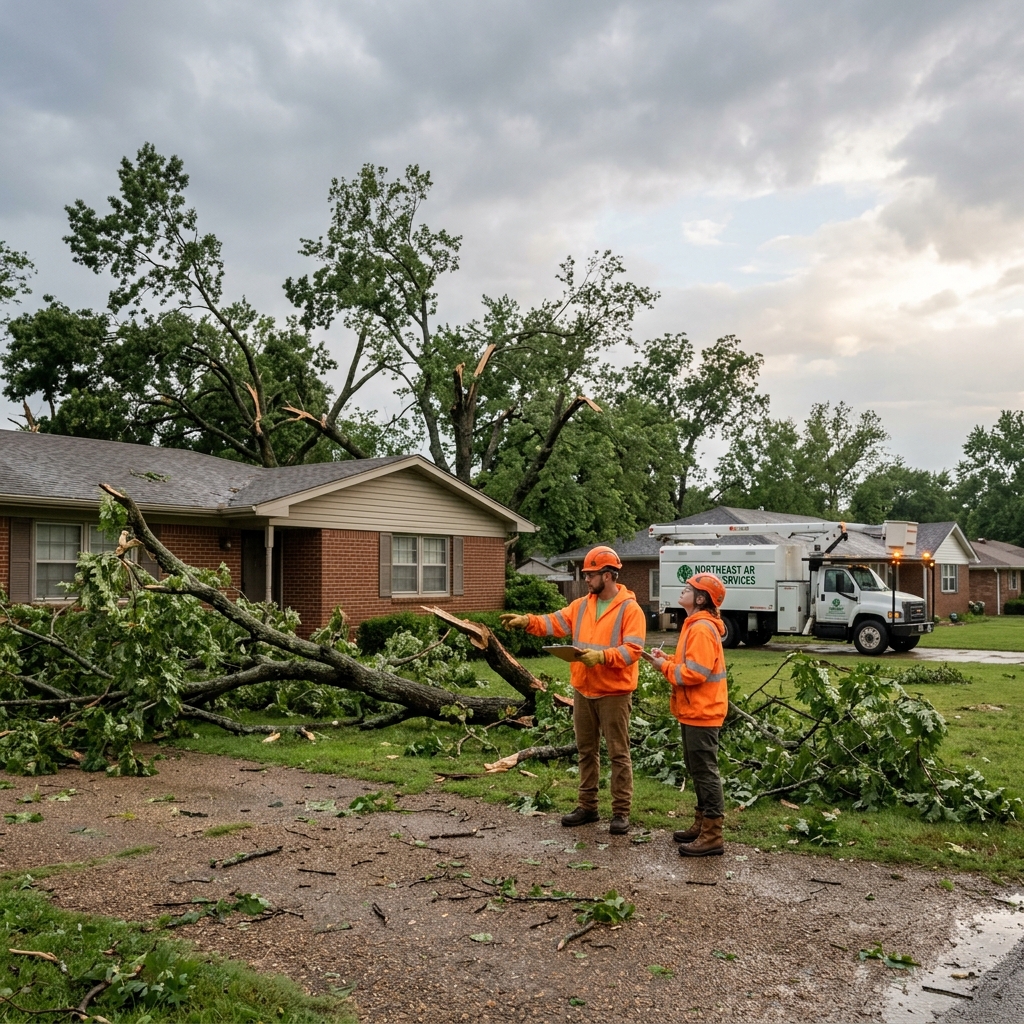
After a storm moves through Jonesboro, the question homeowners most often ask isn't about cost—it's about whether their damaged tree can be saved. The honest answer is: it depends on what's actually wrong with it.
Not every damaged tree needs to come down. And not every tree that looks bad from the outside is beyond trimming. Here's how to think through the decision the way a tree care professional would.
Signs That Point Toward Removal
Major Structural Damage to the Trunk
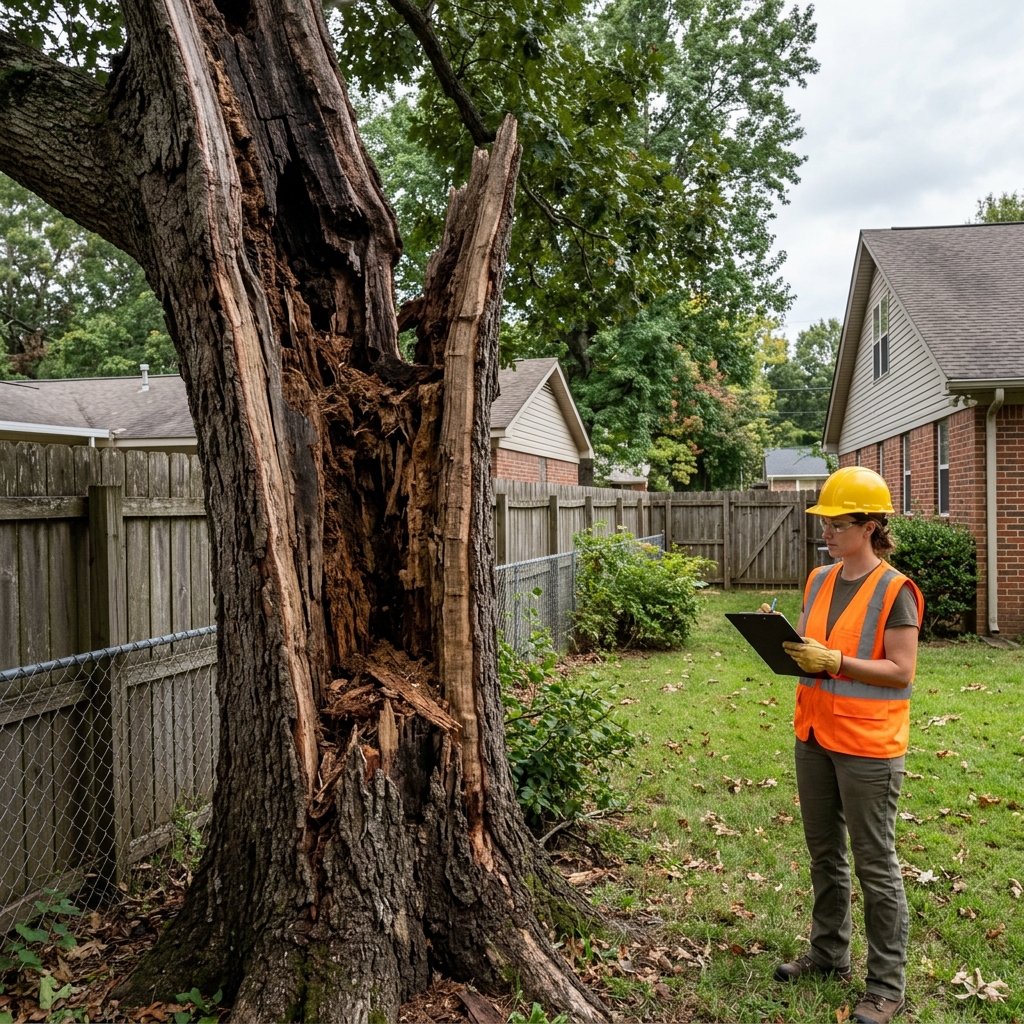
When a trunk splits vertically or develops large cracks through the main wood, the structural integrity of the tree is compromised. Surface wounds from a broken branch are different from deep splits that affect the internal wood. A tree with a major trunk split near its base or main crotch typically cannot be stabilized through trimming alone.
More Than Half the Crown Is Gone
Trees can recover from moderate crown loss, but when more than 50% of the canopy has been stripped or broken, the tree's ability to produce enough energy for recovery is severely limited. Fast-growth hardwoods in Northeast Arkansas like silver maple or cottonwood may push back with new growth, but slow-growing species rarely recover from this level of damage.
Root System Instability
If you see soil heaving on one side of the tree, tilting that has developed quickly, or surface roots that have pulled up from the ground, the root system may have been compromised. Saturated soil during heavy rain events is a common cause of uprooting in Craighead County. A tree with destabilized roots is a fall risk regardless of what the crown looks like.
Significant Internal Decay
Fungal growth at the base, soft wood, hollow cavities, and deadwood distributed through major limbs are signs of internal decay. A tree with extensive decay may continue to look alive at the canopy level while its structural wood deteriorates. The concern is not whether it falls this year, but whether the risk profile is acceptable over the next several years.
Location Over High-Risk Areas
A modestly damaged tree standing in an open field is a different conversation than the same tree positioned over a roof, parked cars, or a frequently used walkway. Location amplifies risk. If a compromised tree fails, what does it hit? That question often drives the removal decision more than the damage level itself.
When Trimming Is the Right Call
If the trunk is structurally sound, the root system is stable, and the damage is limited to specific branches or sections of the crown, targeted trimming is often the appropriate response. Corrective pruning for healthy trees can remove broken, hanging, or dead wood while leaving the tree's long-term structure intact.
Storm-broken limbs that are still attached or hanging should be removed regardless of the tree's overall condition—they present an immediate hazard whether the tree stays or goes. Removing that wood is often the first priority when a crew assesses storm damage.
The In-Between Cases
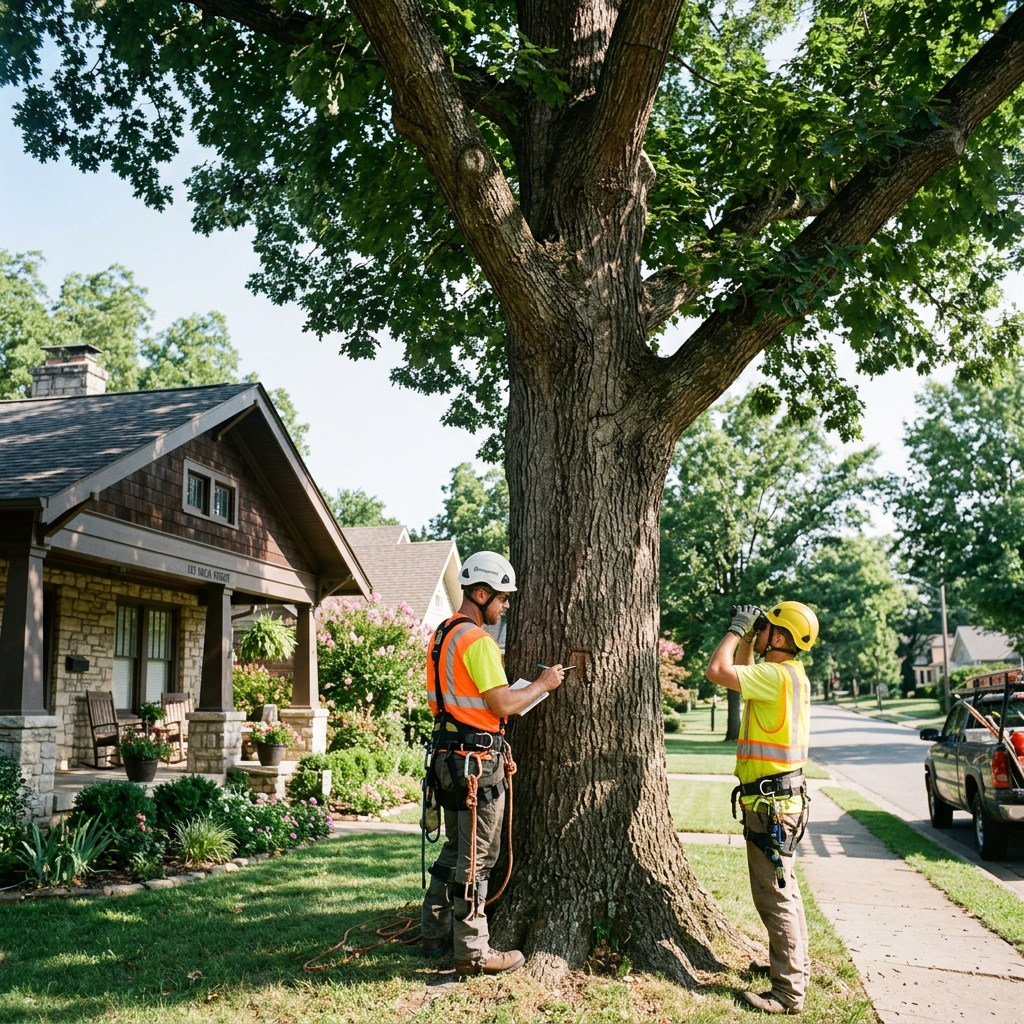
Some trees fall clearly into one category or the other. Others require professional judgment. A large pecan with a cracked main crotch, moderate crown damage, and a position 15 feet from a garage is exactly the kind of case where an in-person assessment matters. There's no formula that substitutes for someone who can look at the tree, tap the wood, and evaluate the actual structural situation.
If you're not sure, get removal options for damaged or dead trees reviewed by a professional before making a decision either way. Rushing to trim a tree that should come down, or rushing to remove a tree that's actually fine, both cost more than an informed decision made upfront.
Not Sure If Your Tree Should Stay or Go?
We provide on-site tree risk assessments for residential and commercial properties throughout Jonesboro and Northeast Arkansas. We'll give you a straight answer on what the tree actually needs.
Frequently Asked Questions
No. Trees that have lost more than 50% of their crown, suffered major trunk splitting, or have root systems that have been destabilized often cannot be structurally restored through trimming. The tree's long-term stability determines whether trimming is a viable option.
Not all lean is dangerous. Some trees grow with a natural lean that has developed over many years and is stable. A newly developed lean, soil heaving at the base, or exposed surface roots on the uphill side are more serious indicators that warrant professional evaluation.
Signs include soft or spongy wood when pressed, visible cavities, mushroom growth at the base, and sudden branch dieback in sections of the crown. A professional assessment with a mallet tap test can help identify hollow sections not visible from the outside.
In many cases, trimming is the less expensive immediate option. But if the tree is structurally compromised and likely to fail anyway within a few years, removal now is usually the more economical long-term decision compared to repeated trimming followed by an eventual emergency removal.
A certified arborist or experienced tree care professional should make that call after an in-person assessment. Aerial photos or phone descriptions are not sufficient for accurate diagnosis of structural tree problems.
The Bottom Line
The line between a tree that benefits from trimming and one that needs removal comes down to structural integrity, root stability, and the consequences if the tree fails. When in doubt, a professional assessment from local tree care specialists in Jonesboro beats guessing from the ground level.