Key Takeaways
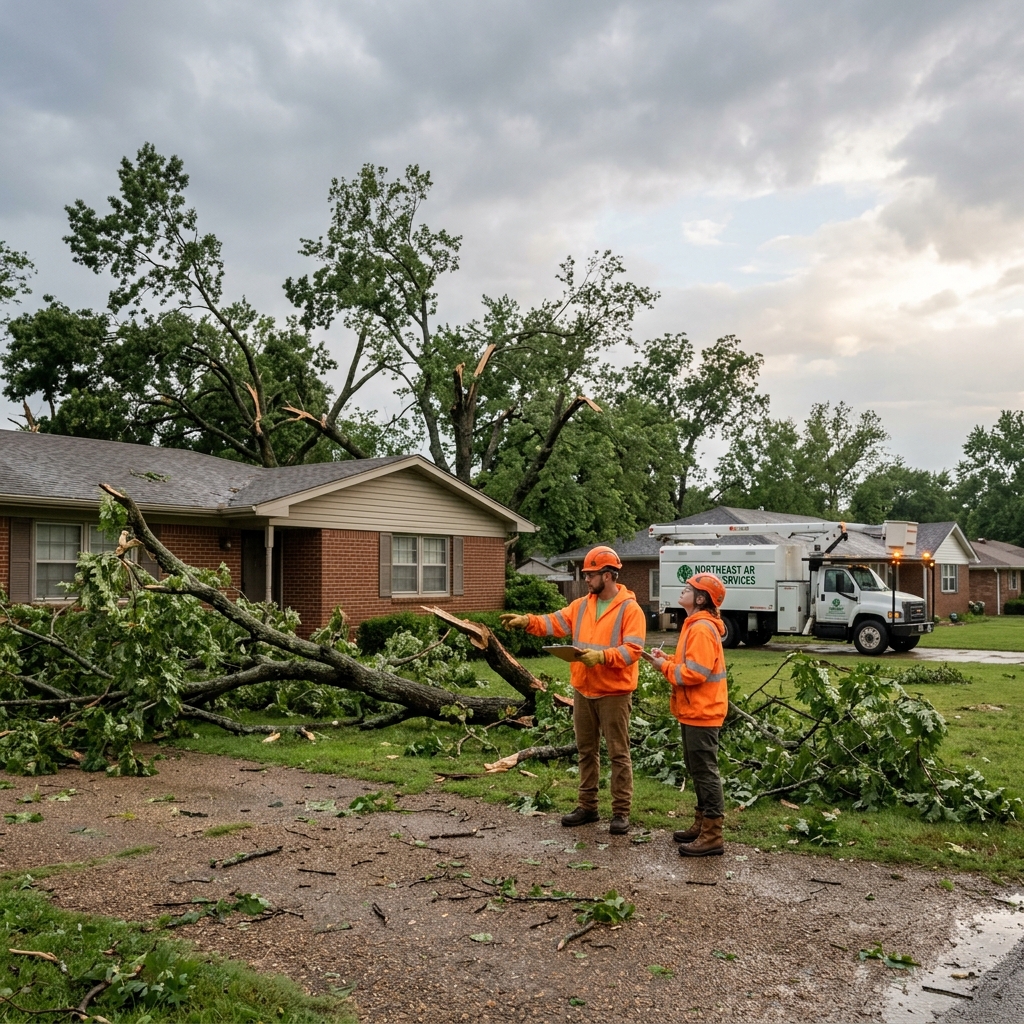
When a tree falls on your Jonesboro property, the immediate priorities are ensuring everyone is safe, staying away from downed power lines, documenting the damage with photographs, contacting your insurance company, and calling a licensed tree crew for emergency removal. Do not enter a structure that has sustained tree impact until it has been inspected for structural integrity.
A tree coming down on your property is disorienting, especially in the middle of a storm. Knowing what to do in the first hour reduces panic and positions you to handle the situation correctly from a safety, insurance, and cost standpoint.
Step 1: Ensure Everyone Is Safe
Before anything else, account for everyone in and around the property. If a tree has hit a structure, do not assume it is safe to be inside. Roof and wall damage from tree impact can compromise structural stability in ways that are not immediately obvious. Get everyone out and away from the structure until it can be assessed.
Step 2: Stay Away from Downed Power Lines
If the fallen tree has brought down a power line or is in contact with one, treat it as a live electrical hazard until the utility company confirms otherwise. Do not touch the tree, the line, or any wet ground around it. Call your utility company immediately and keep bystanders at a safe distance.
Step 3: Document Everything Before Cleanup Starts
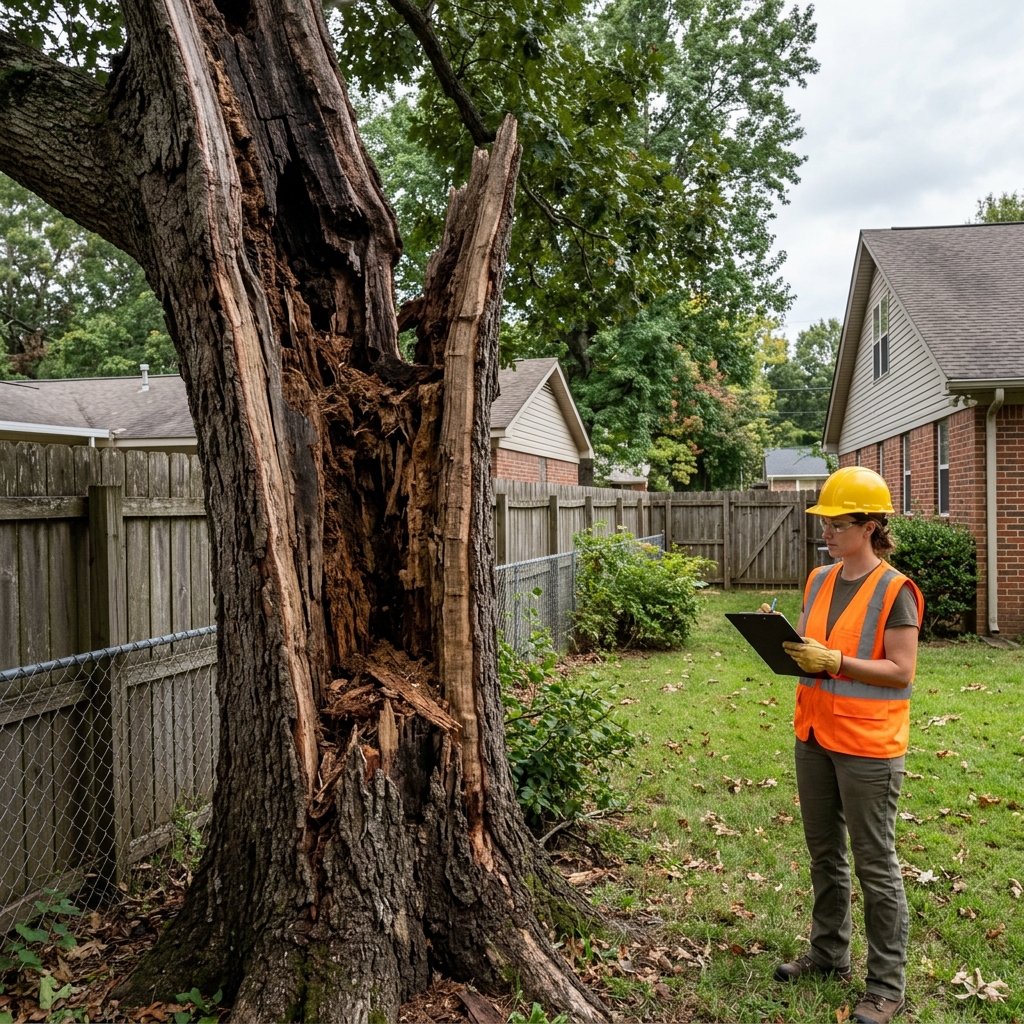
Take photographs and video of the entire scene before any tree removal begins. Document the fallen tree, any structural damage, the point of impact, and the surrounding area. This documentation is critical for your homeowners insurance claim. Once cleanup starts, the evidence changes. Note the date, time, and weather conditions present when the tree fell.
Step 4: Contact Your Insurance Company
Call your homeowners insurance provider as soon as possible. Find out what your policy covers before authorizing any work. Damage to covered structures is often eligible for coverage, but tree removal from the yard alone may not be included. Ask whether the insurer requires specific contractors or allows you to hire independently.
Step 5: Call a Licensed, Insured Local Crew
After a major storm, out-of-area contractors move through affected neighborhoods quickly. Some are legitimate; many are not. For after-hours help with tree hazards, use a local company that can be verified, carries proper insurance, and provides a written estimate before starting any work. Avoid paying the full amount upfront.
Step 6: Manage the Cleanup Systematically
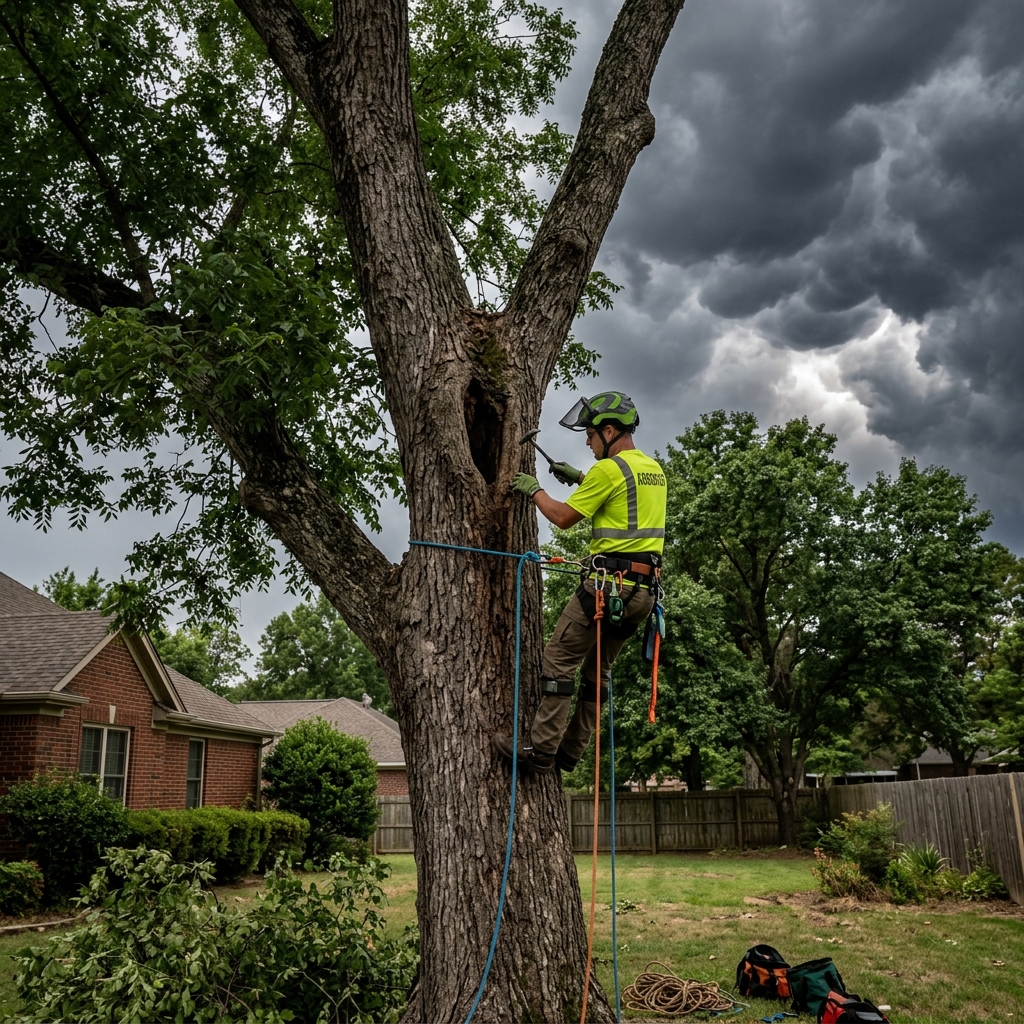
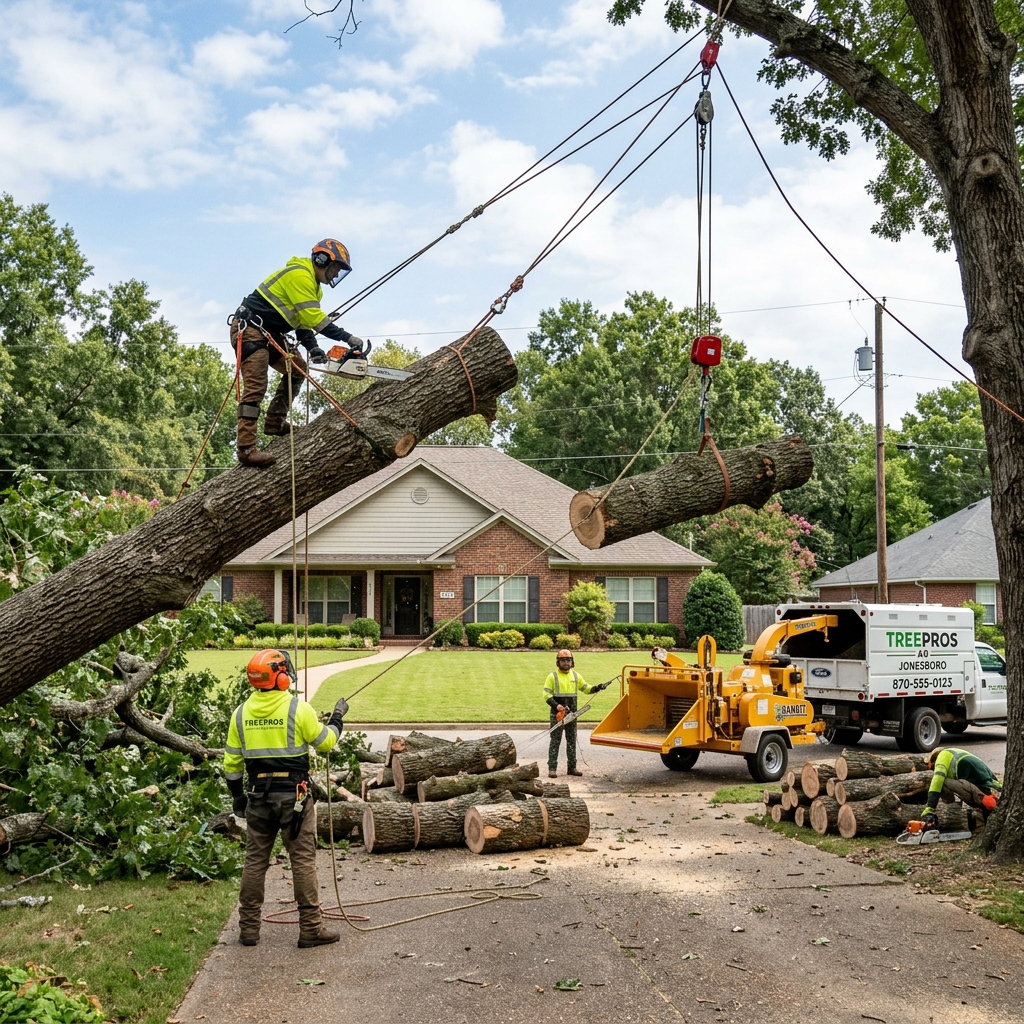
If the tree is resting against a structure, the removal sequence matters. The crew will typically secure the tree before cutting to prevent unpredictable movement. Help clearing fallen branches and debris from a structure requires planning about how each section will be removed and where it will be lowered. Do not start any roof or structural repairs until the tree and all limbs are fully removed.
Step 7: Address the Remaining Stump
Once the tree is removed, the stump remains. A practical way to clear old stumps is grinding it below grade so the area can be replanted, mowed, or developed without ongoing tripping hazards. Get the stump addressed as part of the original job or scheduled shortly after.
Tree Came Down on Your Property?
We provide emergency tree removal throughout Jonesboro and Northeast Arkansas. Licensed, insured, and available when you need us most.
Frequently Asked Questions
Generally, if a tree from a neighboring property falls onto yours due to storm or act of nature, your own homeowners insurance typically covers the damage to your property. If the neighbor was negligent maintaining a known hazardous tree, there may be grounds for a liability claim, but this situation usually requires legal advice.
As quickly as safely possible. A tree resting against a roof or wall adds ongoing load to a potentially compromised structure and traps moisture. Most insurance companies and structural engineers recommend removal within 24-72 hours when a tree is in contact with a structure.
This is strongly not recommended. Trees resting on structures are under unpredictable tension, and improper cutting can cause them to shift or fall in unintended directions, worsening structural damage or injuring people. This work requires a professional crew with proper rigging equipment.
Your insurer will typically want the date and time of the incident, photographs and video of all damage, a written estimate from a licensed contractor, and documentation of any weather event that caused the fall. The more complete your documentation, the smoother the claims process.
In most cases, no. Stump removal is generally considered a separate maintenance item rather than storm damage. The tree removal itself may be partially covered if the tree fell on a covered structure, but stump grinding is typically an out-of-pocket expense.
Bottom Line
A fallen tree is an emergency, but it is a manageable one when you follow a clear sequence: safety first, document before cleanup, contact insurance, use a verified local crew, and address the stump. For trusted local arborists serving Jonesboro and the surrounding area, start with a call and let the professionals handle the rest.