Key Takeaways
Stump grinding removes a tree stump below grade using a rotating cutting wheel, eliminating tripping hazards, preventing pest harborage, stopping ongoing root activity, and restoring usable lawn and garden space. It is faster, less invasive, and less expensive than full stump removal, and the resulting wood chips can be used as mulch or hauled away.
After a tree comes down, the stump that remains rarely improves with age. It sits in the middle of the yard, collects insects, creates a mowing obstacle, and gradually deteriorates while taking up usable space. Most Jonesboro property owners eventually decide the stump needs to go. The most practical approach for residential properties is grinding.
What Is Stump Grinding?
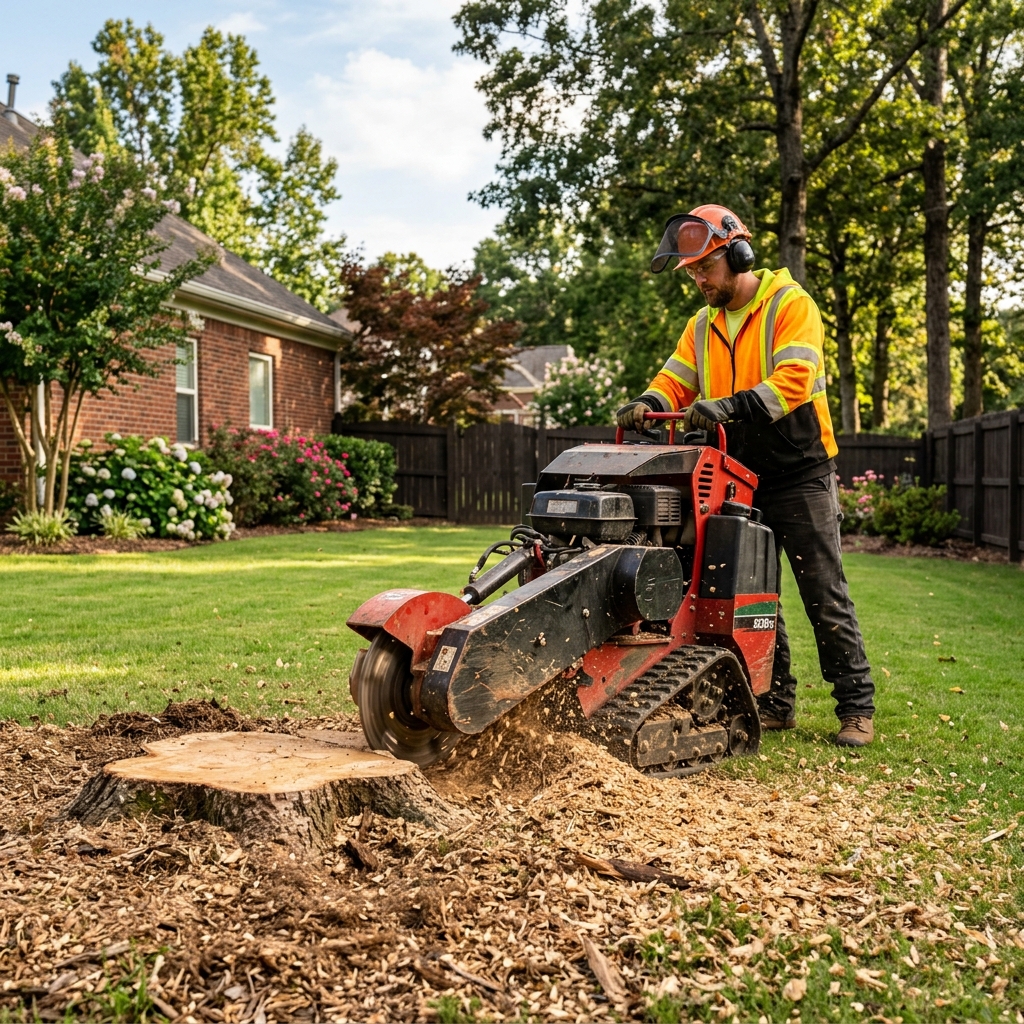
Stump grinding uses a rotating cutting wheel with hardened teeth to chip the stump and surface roots below grade, usually 6 to 12 inches into the soil. The process produces wood chips that fill the resulting void and can be left in place to decompose or removed if you prefer clean fill and sod. Grinding does not remove the entire root system—the deep lateral roots remain in the soil and decompose naturally over several years.
Safety Benefits
Eliminating Tripping Hazards
A stump sitting even a few inches above grade is a tripping hazard for adults and children, particularly at dusk or after dark. Removing leftover stumps below grade eliminates the hazard entirely rather than simply marking it with a border or flag.
Removing Pest Harborage
Decomposing stumps attract termites, carpenter ants, beetles, and other wood-boring insects. When that stump is close to your home, as many Jonesboro residential stumps are, it creates pest pressure near your foundation. Grinding removes the attractive material before insect colonies become established.
Stopping Root Sprouts
Some tree species continue generating root sprouts from the stump after the tree has been cut, creating ongoing maintenance demands. Grinding the stump disrupts the remaining root energy and, for most species, significantly reduces this sprouting over time.
Appearance and Property Use Benefits
Restoring Usable Lawn Space
A stump occupies a section of lawn that cannot be mowed over or planted in normally. Grinding the stump and filling the depression with topsoil and seed restores that patch to full use. For smaller yards where every square foot matters, this makes a meaningful practical difference.
Improving Curb Appeal
Stumps are visually disruptive in otherwise well-maintained front yards. Removing a visible stump improves the overall presentation of the landscape, which matters whether the property is owner-occupied or a rental.
Enabling New Planting
Once the stump is ground and the chips are removed, the area can be replanted. You may add a new tree, install garden beds, or simply grass the area over. Yard restoration after tree removal gives you a blank canvas rather than a permanent obstacle.
What the Process Looks Like
The grinding crew brings equipment to the stump site, cuts it down close to ground level, then uses the grinder to chip the stump in a controlled pass. Larger stumps require multiple passes at different depths. Equipment access matters—walk-behind grinders fit through standard gate openings for most residential backyards. A professional crew will assess which equipment is appropriate based on stump size and site access.
Ready to Clear That Stump?
We provide stump grinding throughout Jonesboro, Brookland, Bono, and surrounding communities. Written estimates. Equipment sized to the job.
Frequently Asked Questions
Standard residential stump grinding typically cuts 6 to 12 inches below grade, sufficient for most replanting and lawn restoration purposes. If you need to pour concrete or build a structure over the area, deeper grinding or full stump removal may be necessary.
The chips can be left in the void to decompose over 1-3 years. They can also be raked out and used as mulch in garden beds, or hauled away if you prefer to bring in clean topsoil and sod the area.
Most residential stumps take 30 minutes to 2 hours depending on diameter, wood density, and root complexity. Multiple stumps on the same property can often be done in a single visit at a lower per-stump cost.
The remaining root system will decompose over time, typically 2-7 years for most hardwood species common in Northeast Arkansas. During decomposition, slight soil settling over the root lines is possible. Root sprouts may occur in the first year or two but decrease as root energy diminishes.
For most residential situations, yes. Grinding is faster, less disruptive to the surrounding lawn, and less expensive than excavating the entire stump and root ball. Full removal is more appropriate when the area needs to be built on or when the complete root system must be extracted.
Bottom Line
Stump grinding is one of the most straightforward property improvements a Jonesboro homeowner can make after losing a tree. It eliminates tripping hazards, discourages pests, restores usable space, and improves the yard. For professional stump grinding options with on-site estimates, connect with a local tree care crew that can size the right equipment to the job.