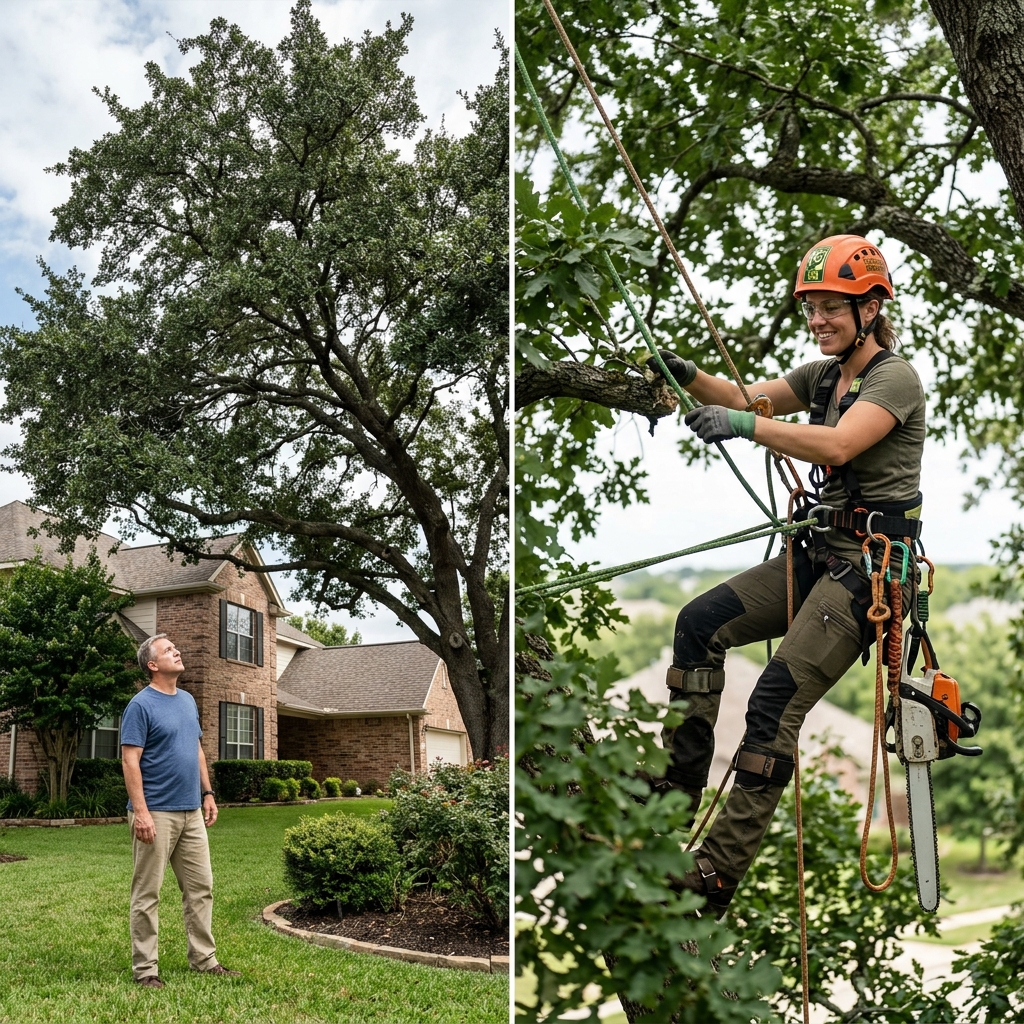
Key Takeaways
Small, low-risk tree work can be a reasonable DIY project for experienced homeowners. Medium and large trees, work near structures or power lines, removal requiring directional felling, and any tree that is dead, heavily leaning, or positioned over a structure should be handled by trained professionals with the right equipment and insurance coverage.
There is a genuine category of tree work that handy homeowners can handle safely. There is also a category where doing it yourself creates far more risk than the cost of hiring a professional saves. Understanding where that line is makes all the difference.
What Homeowners Can Reasonably Handle
Light pruning of small branches reachable from the ground with loppers or a handsaw is generally well within DIY range. Cleanup of debris that has already fallen with no ongoing hazard is also manageable. If the wood is on the ground, in the open, with no tension on it, and you have a chainsaw you know how to use safely, that is a reasonable scope.
Some people are comfortable removing small ornamental trees under 15 feet in open areas where a controlled fall is straightforward. If that describes your situation, and you have appropriate safety equipment—chainsaw chaps, gloves, eye and hearing protection, and a clear drop zone with no one nearby—it may be workable.
When to Call a Professional
Any Tree Near a Structure, Fence, or Vehicle
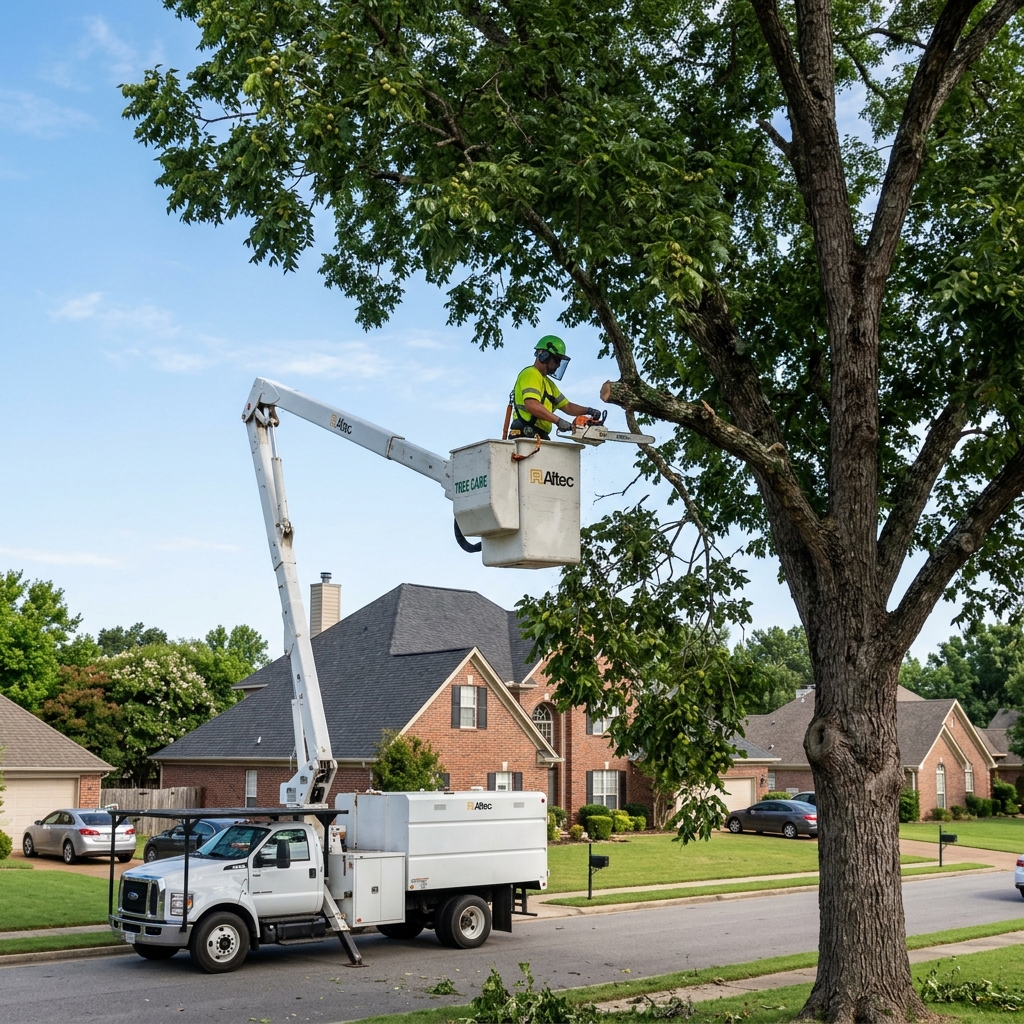
When a tree has to fall or be lowered in a specific direction, you are no longer doing simple felling. You are doing controlled directional removal with rigging, which requires trained technique and proper rope and rigging equipment. Getting this wrong is expensive and dangerous to bystanders. A professional crew has the tools and training to rig sections down safely.
Trees Near Power Lines
This is not a gray area. Any tree in contact with or near a power line requires either utility company coordination or a trained crew with relevant certifications. Do not attempt to cut branches that are touching or close to overhead electrical conductors.
Dead, Diseased, or Heavily Leaning Trees
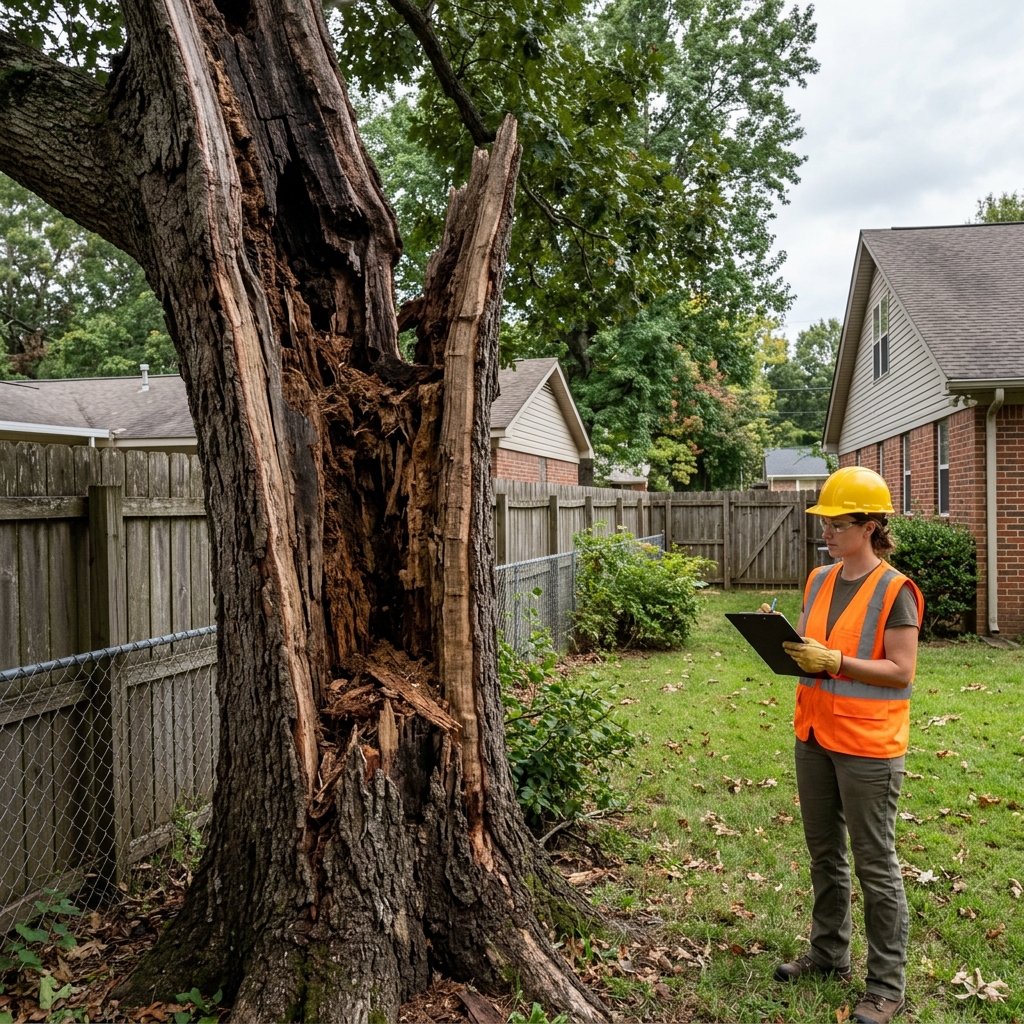
Dead trees have brittle wood that behaves unpredictably during cutting. Trees that are already leaning have tension built up in the wood, and managing the release of that tension when you cut requires experience. For safe removal of hazardous trees, professional crews use wedges, bore cuts, rigging systems, and sometimes cranes to control the outcome.
Trees Requiring Climbing
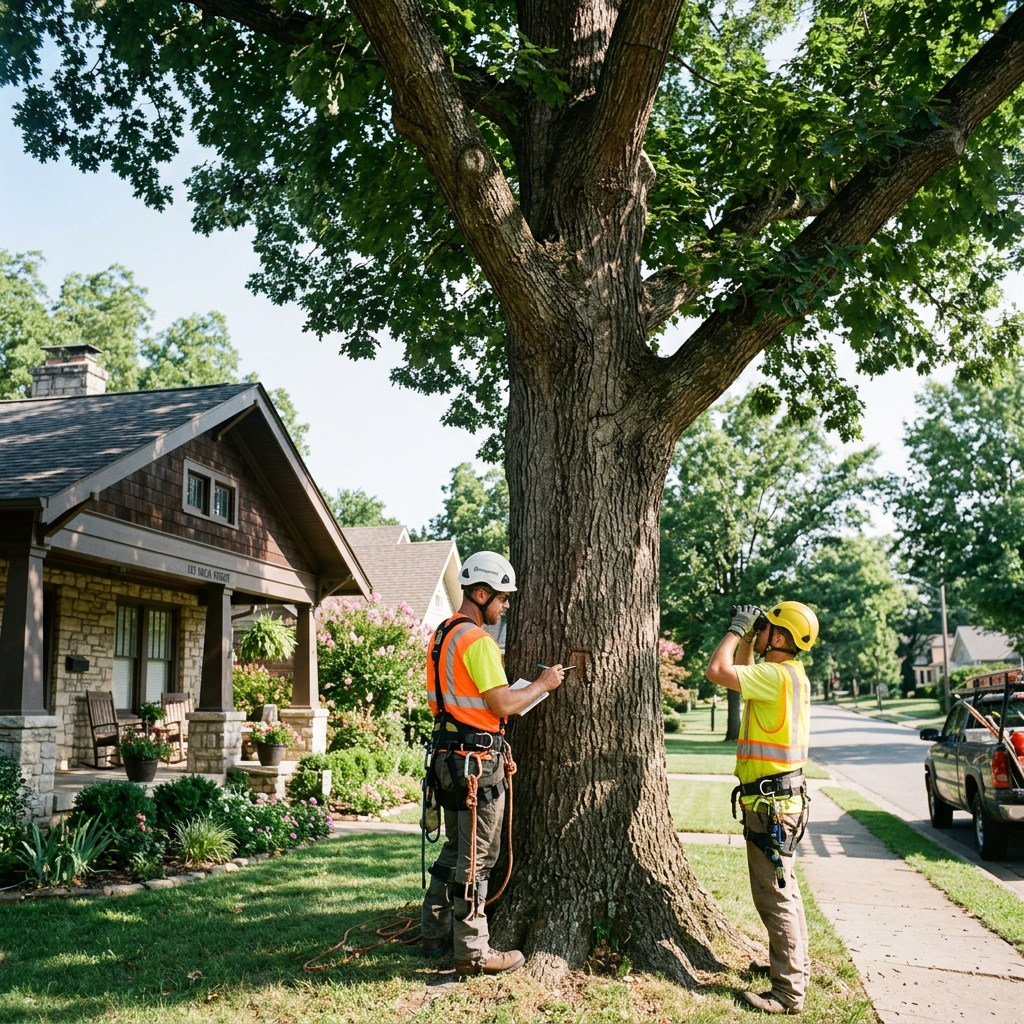
As soon as a chainsaw and a ladder appear in the same sentence, the risk profile escalates sharply. Arborists who climb use specialized harnesses and rigging systems. Homeowners improvising with extension ladders and chainsaws account for a significant portion of serious tree-work injuries each year. Selective branch care in the upper canopy of any tree over 15 feet is consistently better left to trained climbers.
The Real Cost Comparison
It is tempting to look at a professional quote and compare it to chainsaw rental. The real comparison includes your time, equipment costs, debris disposal, personal risk, and property damage risk if something goes wrong. On small jobs in safe conditions, DIY can save money. On medium to large jobs, the professional quote often looks different once all those variables are counted.
Not Sure If Your Tree Job Is DIY or Professional?
Call us for an on-site assessment. We will give you a straight answer about what the job involves and provide a written estimate if professional work is needed.
Frequently Asked Questions
Small ornamental trees under 10-15 feet that can be felled in a clear, open area with no overhead hazards or nearby structures are generally within reach for experienced homeowners with proper equipment. Anything larger, near a fence or structure, or requiring a ladder and chainsaw simultaneously is a different risk category.
Live power lines carry voltages that can arc to objects that come within several feet of the conductor. A branch falling toward a power line, a saw blade held too close, or even a wet branch touching the wire can result in electrocution. Never work near power lines without utility company coordination.
Chainsaw kickback, falls from ladders, being struck by falling branches, and being hit by a tree that fell in an unintended direction are the leading causes. Many of these occur on what seemed like straightforward small jobs.
On small jobs where the work is genuinely within your skill set and the safety conditions are right, DIY can save money. On medium to large jobs, equipment rental, time, debris disposal, and risk often make a professional quote more economical than it first appears.
Ask about general liability insurance and workers compensation coverage. Ask for a written estimate. Be cautious of anyone who shows up uninvited after a storm, insists on same-day payment, or cannot provide insurance documentation. Established local companies can be verified through referrals and business records.
Bottom Line
DIY tree work has its place for small, low-risk jobs handled by experienced homeowners. For everything else, the cost of bringing in Jonesboro tree care specialists is a lot easier to manage than the cost of a mistake. When in doubt, get a quote first. It is free, and knowing what you are actually dealing with is always worth the call.