Key Takeaways
Commercial tree maintenance in Jonesboro requires proactive scheduling, attention to canopy clearance over parking areas and walkways, documentation for liability management, coordination with business hours, and consistent follow-through across all trees on the property. The goal is preventing hazards before they become incidents and maintaining a professional appearance that reflects well on the business.
Trees on commercial property in Jonesboro are a business asset and a liability in equal measure. When maintained well, they improve the visual appeal of storefronts, office parks, and retail centers. When neglected, they create slip-and-fall risks, vehicle damage exposure, and liability problems that no business owner wants.
Schedule Maintenance Before Problems Develop
The biggest difference between well-managed and poorly managed commercial landscapes is whether tree work is planned or reactive. Reactive maintenance is always more expensive than scheduled preventive care. Businesses that schedule scheduled maintenance for commercial trees on an annual or biennial cycle get more consistent results and avoid the disruption of emergency response during business hours.
Prioritize Clearance Over Parking Areas and Walkways
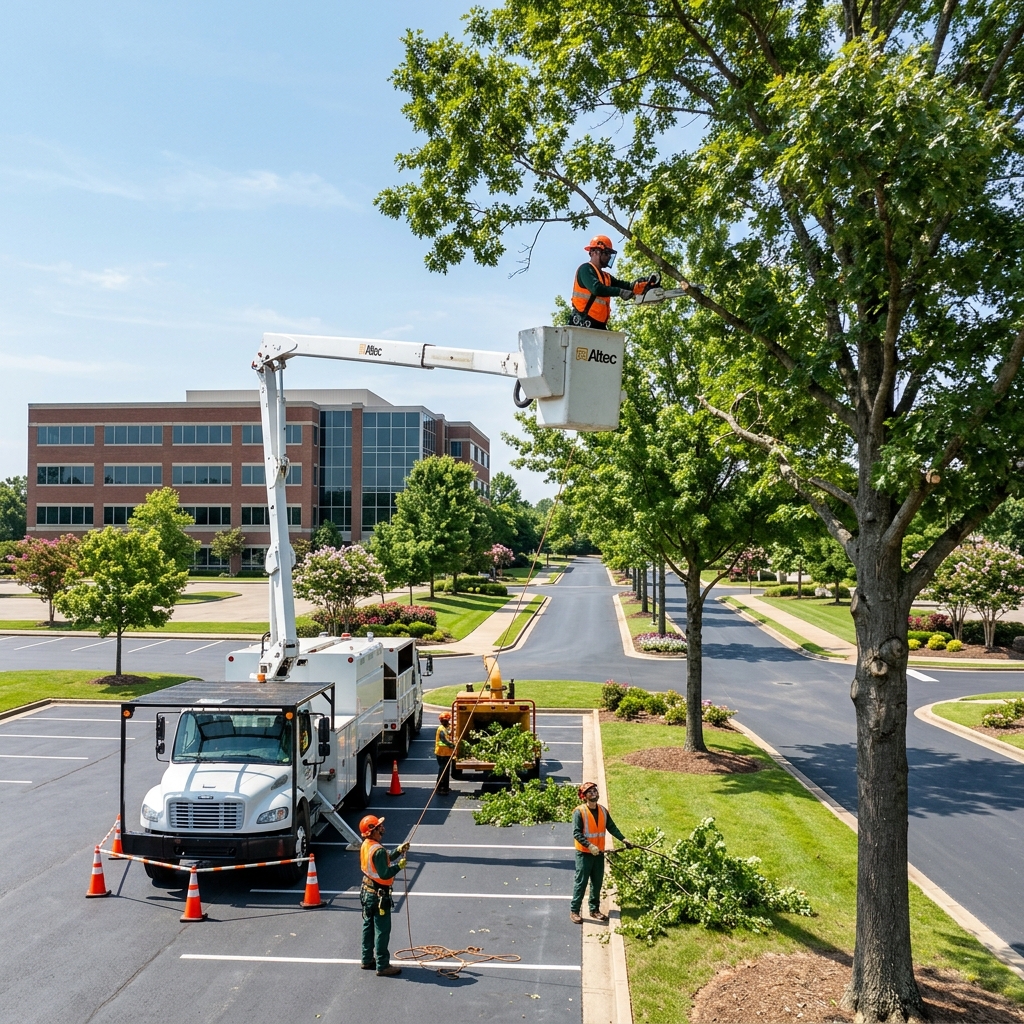
Branches overhanging parking lots create two distinct risks. Dead limbs can fall on vehicles, resulting in damage claims. Low-hanging live branches damage delivery trucks, moving vehicles, and tall passenger vehicles. Standard clearance targets are 14 feet for traffic lanes and 10 feet over pedestrian walkways. Walkway clearance above customer-facing entrances is especially critical for retail locations.
Keep Signage and Building Visibility Clear
Trees that were well-positioned five years ago may now block storefront signage or the building exterior from street view. Fast-growing species common in Jonesboro commercial plantings can reduce visibility noticeably in a single growing season. During your annual assessment, check sightlines to your signage from the street and the parking lot entrance.
Document Tree Conditions for Liability Management
Commercial property liability exposure from trees is real. If a branch falls on a customer or vehicle on your property, documentation of your maintenance history matters. Keep records of every service visit. If trees show signs of disease, structural weakness, or significant deadwood, address them promptly and document that you did.
Coordinate with Business Hours and Tenant Schedules
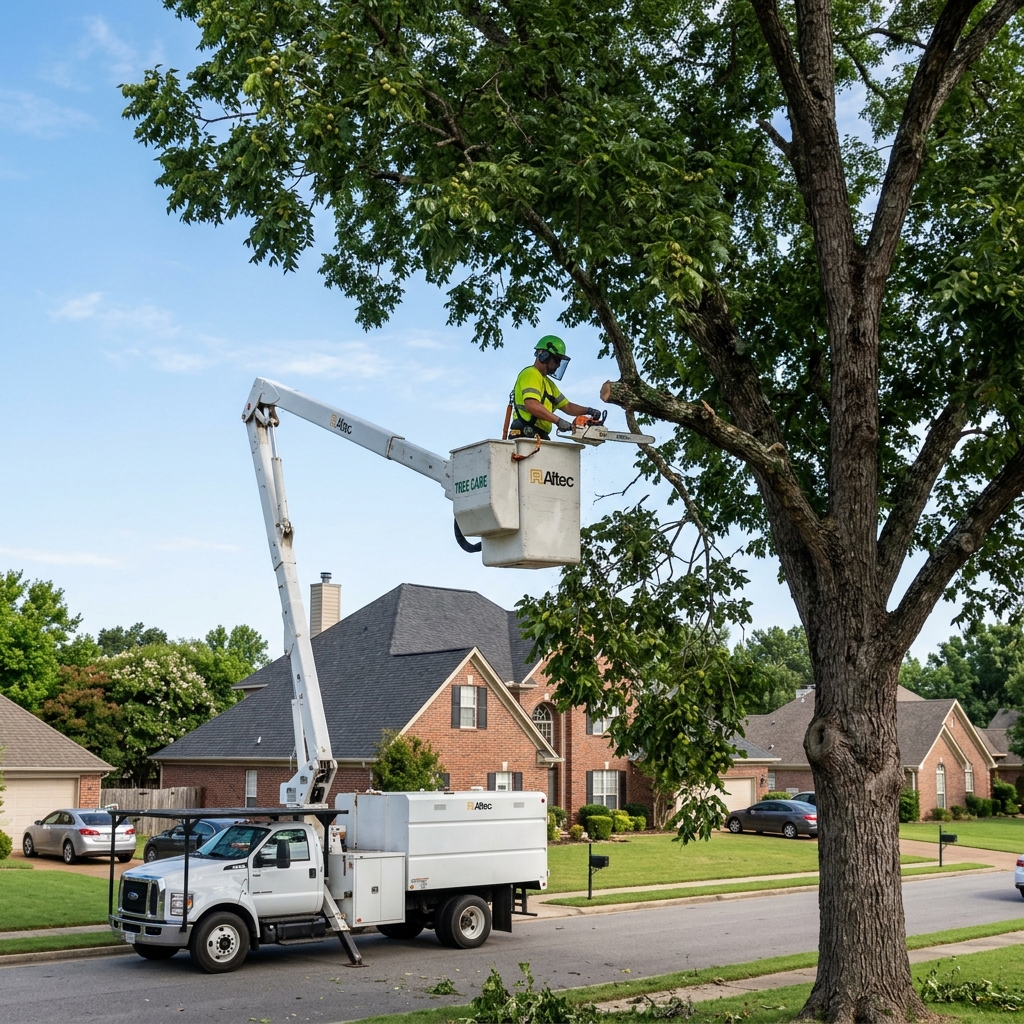
Commercial tree maintenance involving bucket trucks and chippers creates noise and may temporarily block parking lot access. Coordinate with tenants and schedule maintenance during off-peak hours. Early morning start times and mid-week scheduling reduce disruption to customers and tenants. For larger properties, a single coordinated maintenance day is more efficient than individual service calls for each tenant section.
Address Storm Damage Promptly
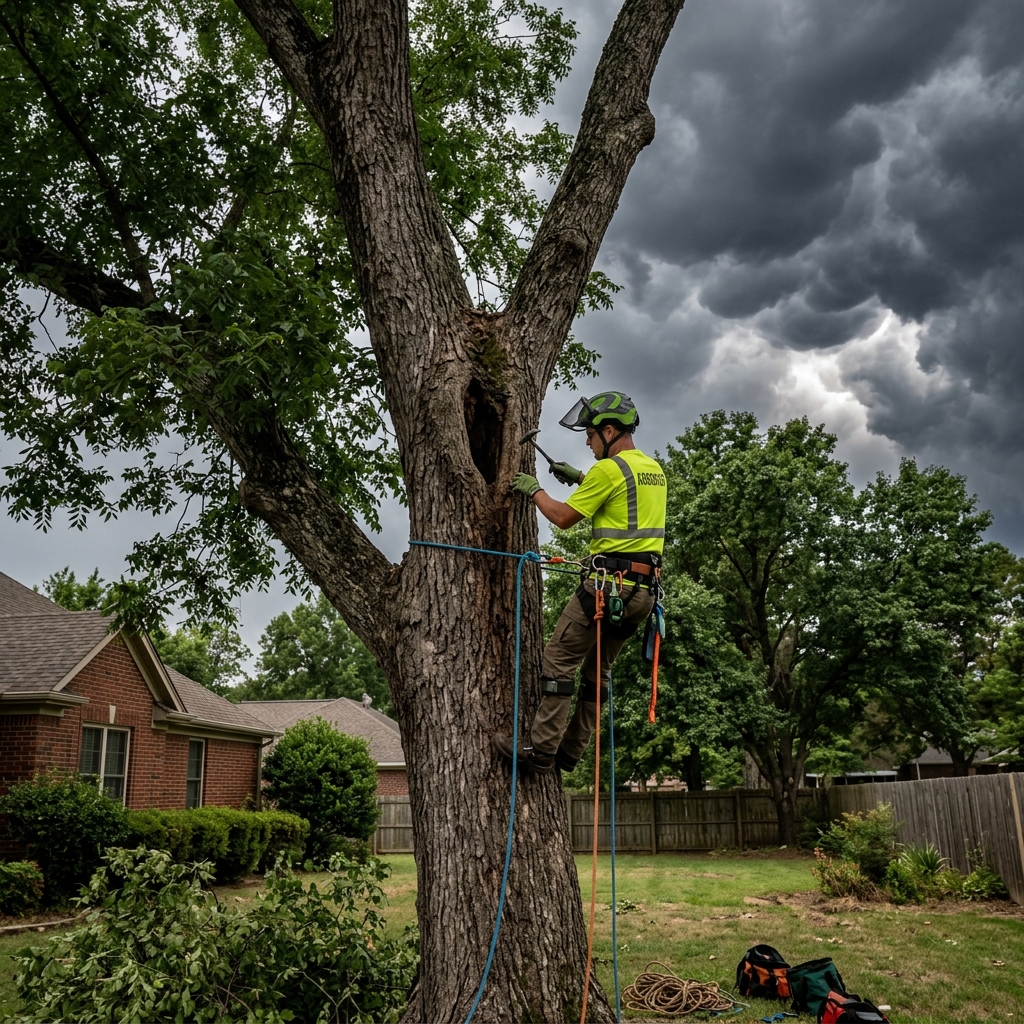
After a significant storm, commercial properties should be walked for tree hazards before customers arrive. Broken branches in canopies near customer areas is a reason to restrict access to that portion of the property until a professional can assess and address the hazard. Emergency assistance for dangerous trees is available for commercial situations requiring immediate action outside normal business hours.
Include Trees in Your Property Inspection Routine
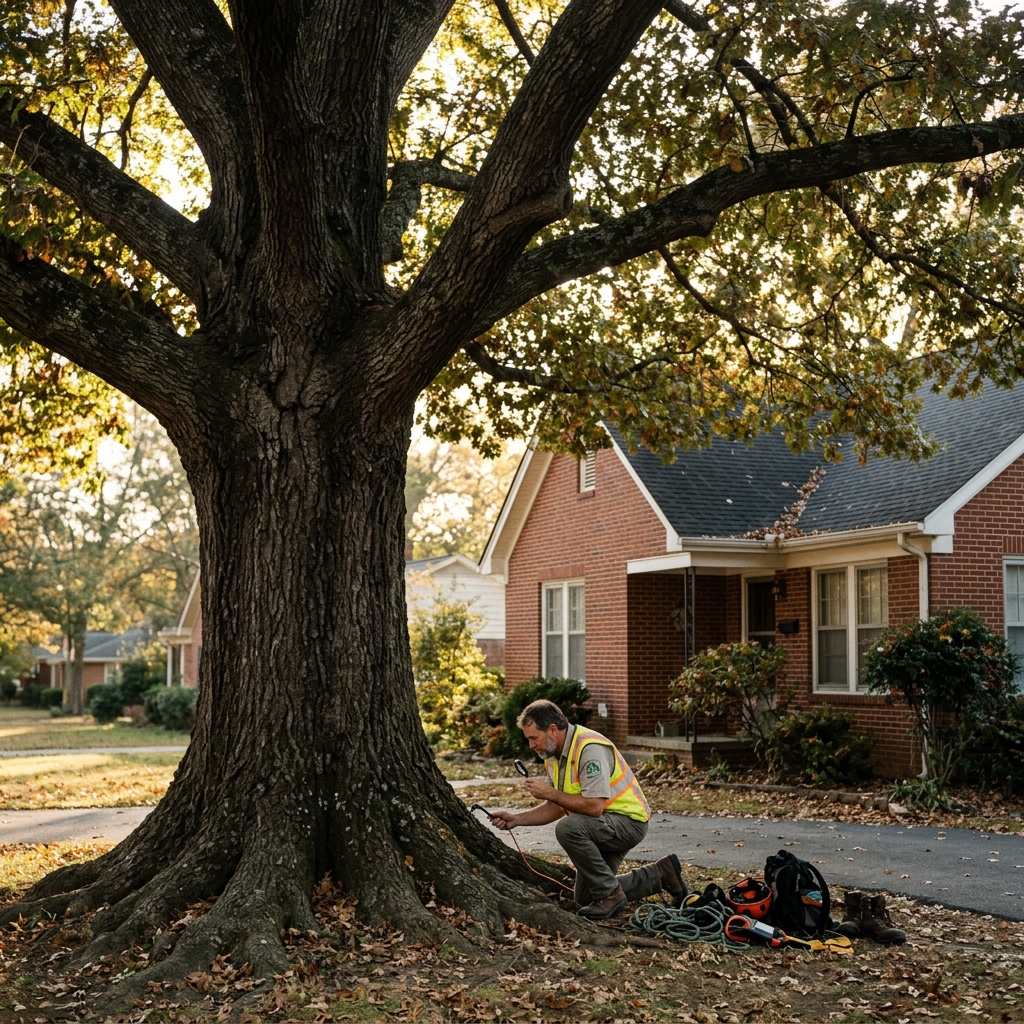
Most commercial property managers inspect parking lot lighting and building systems regularly. Trees should be included in that routine on a monthly or quarterly basis. Early identification of deadwood accumulation, pest activity, or canopy contact with structures catches problems before they escalate.
Professional Tree Care for Your Jonesboro Business Property
We provide scheduled commercial tree maintenance for office parks, retail centers, HOAs, and multi-family properties throughout Jonesboro and Craighead County. Written estimates and flexible scheduling.
Frequently Asked Questions
Most commercial landscapes benefit from a professional assessment and maintenance visit at least once per year. Some properties with high customer-facing traffic or complex tree inventories schedule quarterly inspections.
This varies by lease agreement. In most commercial lease structures, the landlord or property owner is responsible for exterior grounds maintenance including trees. Review your lease carefully and clarify responsibility in writing before an incident creates a dispute.
Tree maintenance on commercial property is generally deductible as an ordinary business expense related to property maintenance. Tree removal that is part of an improvement project may need to be capitalized. Consult your accountant for your specific situation.
Document the scene immediately with photographs before the vehicle is moved. Notify your commercial property insurance carrier promptly. Cooperate with the vehicle owner's insurance claim process. Your maintenance history documentation will be relevant to the claim outcome.
Species with shallow root systems that damage pavement, messy fruit drop near customer areas, and invasive growth patterns requiring constant maintenance are worth avoiding. Local tree care professionals familiar with Jonesboro conditions can recommend appropriate species for commercial plantings.
Bottom Line
Commercial tree maintenance in Jonesboro is not something to manage reactively. Scheduled care, documented maintenance records, and prompt response to identified hazards protect your business from liability and keep your property presenting well to customers. For tree maintenance for business properties throughout Jonesboro and surrounding commercial corridors, work with a local company that understands commercial scheduling and carries appropriate insurance.