Key Takeaways
The most common storm-related tree problems in Northeast Arkansas include hanging broken limbs, partially uprooted trees, split trunk crotches, and trees that have fallen against fences or structures. Saturated soil from heavy rain makes uprooting more likely, and straight-line winds frequently break large canopy limbs without toppling the whole tree.
Jonesboro and surrounding Craighead County see their share of severe weather. Thunderstorm lines, straight-line wind events, and occasional ice storms all affect the area's mature tree population in predictable ways. Knowing what to look for after a storm helps you prioritize what needs immediate attention.
Hanging and Broken Limbs
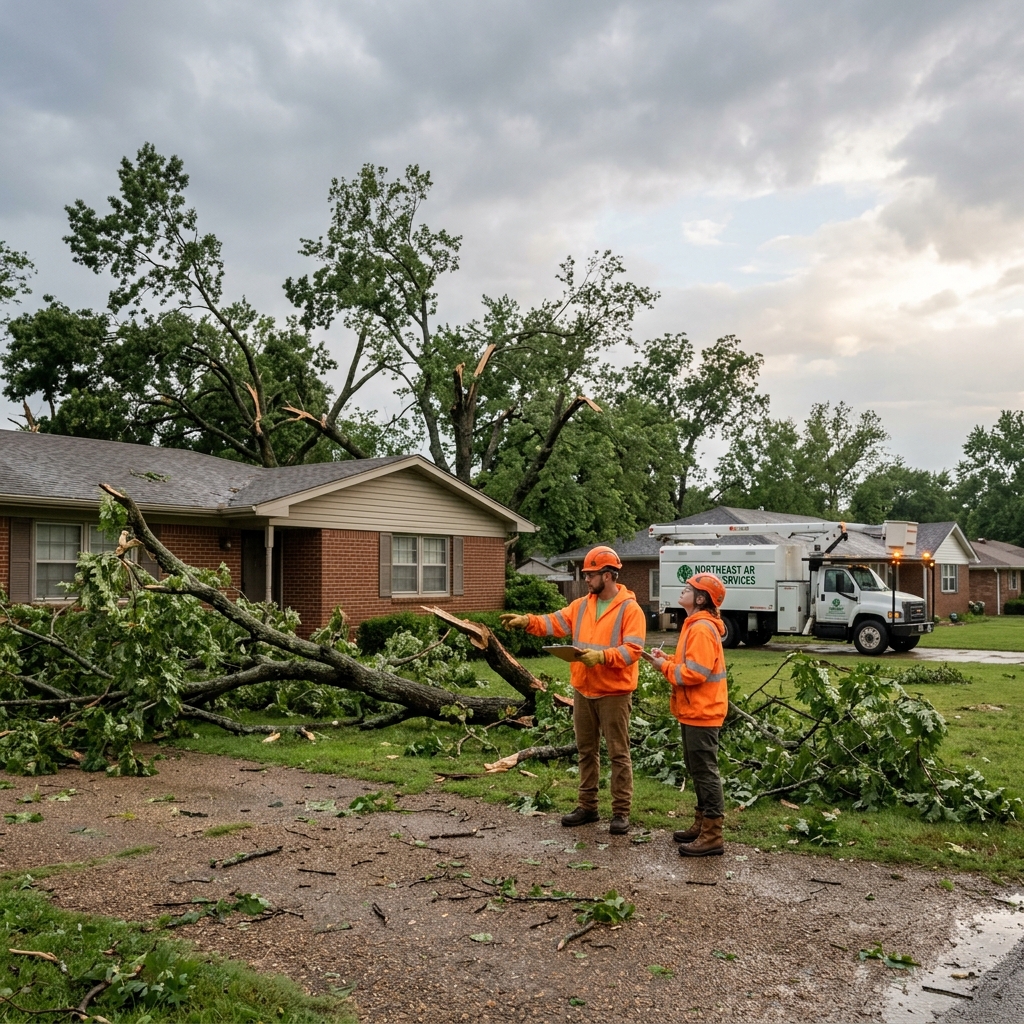
This is the most immediate hazard after most Northeast Arkansas storm events. High winds break large limbs that remain suspended in the canopy, caught by surrounding branches or held by a strip of bark. These are called widow-makers because they can drop without warning. Keep everyone away from under any affected tree until a crew can remove them safely.
Split Trunk Crotches
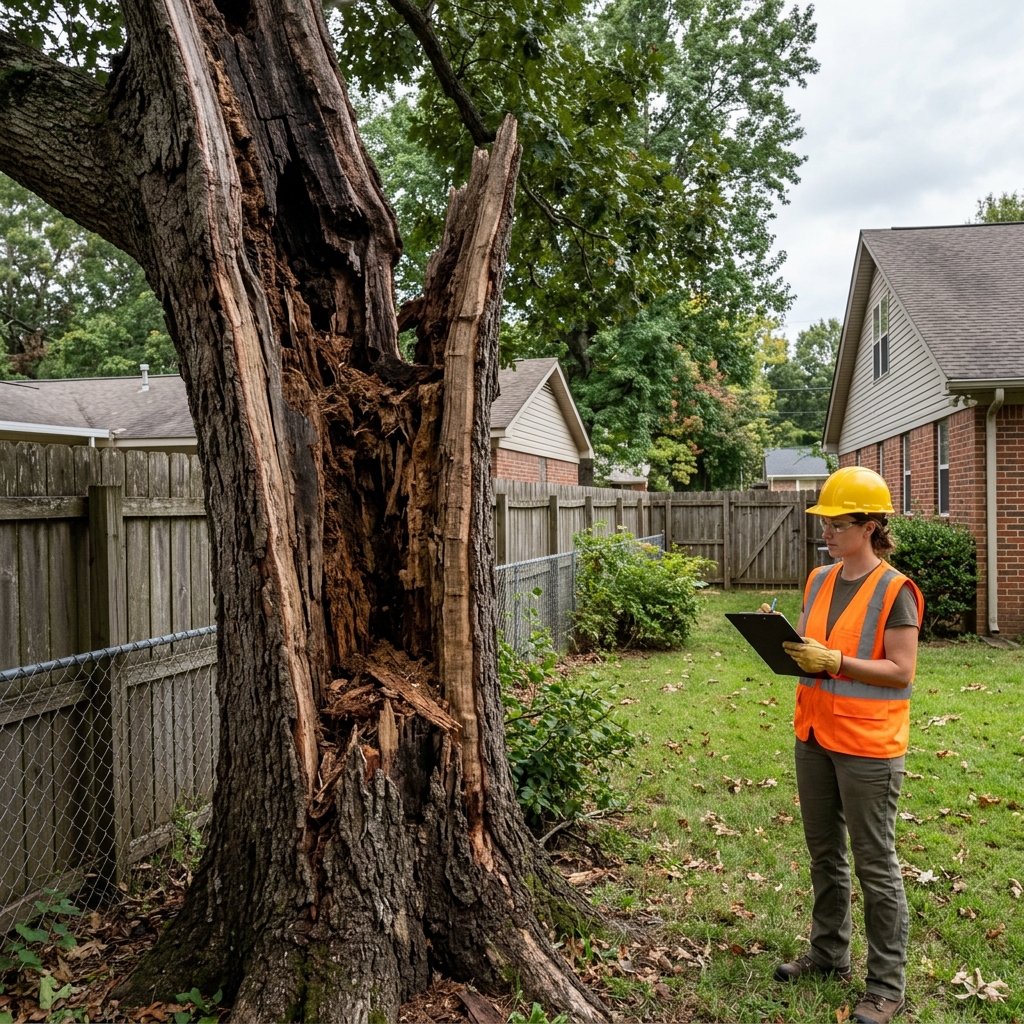
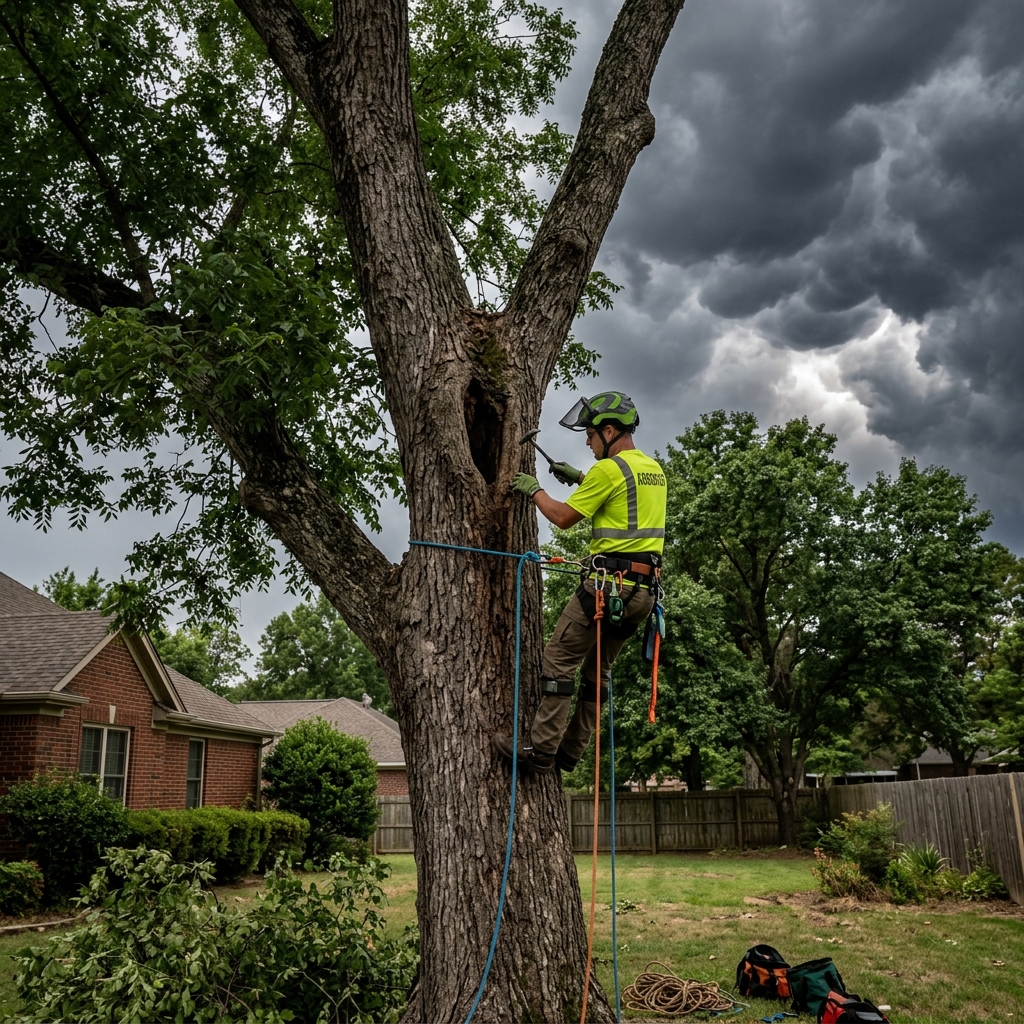
Many mature trees in established Jonesboro neighborhoods have co-dominant stems growing from the same point. This structure is visually appealing but mechanically weak. Under wind or ice load, these crotches split, tearing the trunk vertically. A partially split crotch is not stable—the remaining wood holding the two halves together can give way at any point. Expert tree removal support is typically the right response for a major trunk split.
Partially Uprooted Trees
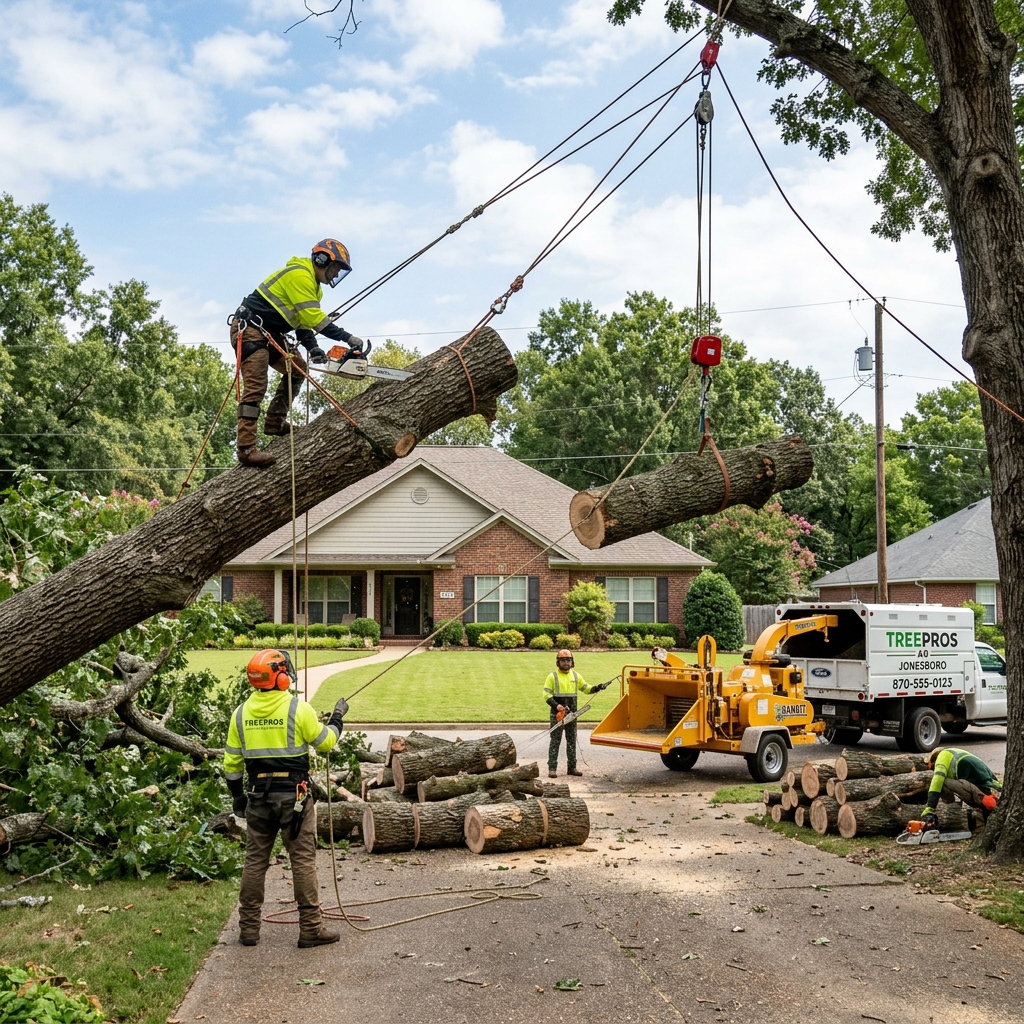
Heavy rain saturates soil across Craighead County, reducing the grip root systems have in the ground. When strong winds follow saturated ground, trees that would otherwise hold can shift or tip. A partially uprooted tree still under load is extremely unpredictable. These need to be evaluated and removed by a crew with the equipment to handle controlled removal under tension. Rapid storm-damage response is the right call for any partially uprooted tree near a structure.
Trees Down Across Fences and Driveways
Fallen trees crossing driveways or resting on fencing are common post-storm situations. If the fallen tree is on the ground with no tension and clear of utility lines, this is cleanup work. If it is resting against a fence under load, the fence is holding weight, and removal must be done carefully. Property cleanup following a storm is often prioritized in phases: active hazards first, blocked access next, then general debris.
Ice Storm Damage
Late-winter ice events produce a different pattern. Ice accumulation adds weight to every branch, and limbs that would not fail under wind break under the compressive weight. Bradford pears, common throughout Jonesboro neighborhoods, are particularly prone to splitting under ice load due to their naturally weak branch structure.
Post-Storm Hazard Assessment Checklist
After any significant storm, walk your property carefully before letting children or pets outside. Look for:
- Limbs that are partially attached and hanging overhead
- Trees that have shifted or developed a new lean
- Bark torn downward on the trunk
- Root flare movement or soil heaving on one side
- Cracks in major crotches or branch unions
Storm Damage on Your Property?
We respond to storm damage calls throughout Jonesboro and Northeast Arkansas. Emergency and non-emergency cleanup handled by an experienced local crew.
Frequently Asked Questions
The most frequent issues include large broken limbs hanging in the canopy, partially uprooted trees leaning against structures, trees or limbs fallen across fences or driveways, and split trunk crotches where two major stems have separated under wind load.
No. Hanging or partially detached limbs can drop without warning. Keep people and pets away from under any tree with visible hanging wood until a professional can assess and remove it.
It depends on your policy and where the tree falls. If a tree falls on an insured structure, the structural damage is often covered. The cost to remove the tree itself may or may not be included. Document everything with photos before any cleanup begins.
For trees against structures or active hazards, call immediately. For non-emergency debris, most reputable companies can respond within a few days. Be cautious of out-of-area contractors who show up unsolicited with pressure to sign contracts on the spot.
Small branches on the ground with no tension may be manageable for experienced homeowners with proper equipment. Never attempt to cut limbs that are under load, pinning something down, or near any utility line. The release of tension when cutting a loaded limb can be sudden and dangerous.
Bottom Line
Storm damage in Northeast Arkansas follows predictable patterns once you know what to look for. Hanging limbs, split crotches, and partially uprooted trees require the most immediate professional attention. When in doubt, maintain a safe distance and get a professional assessment before starting any cleanup yourself.