Key Takeaways
Regular professional tree trimming protects Jonesboro properties by removing deadwood before it falls, establishing clearance from roofs and structures, reducing wind resistance during storm season, and preventing branches from contacting siding, gutters, or utility lines. It is one of the most cost-effective forms of ongoing property maintenance.
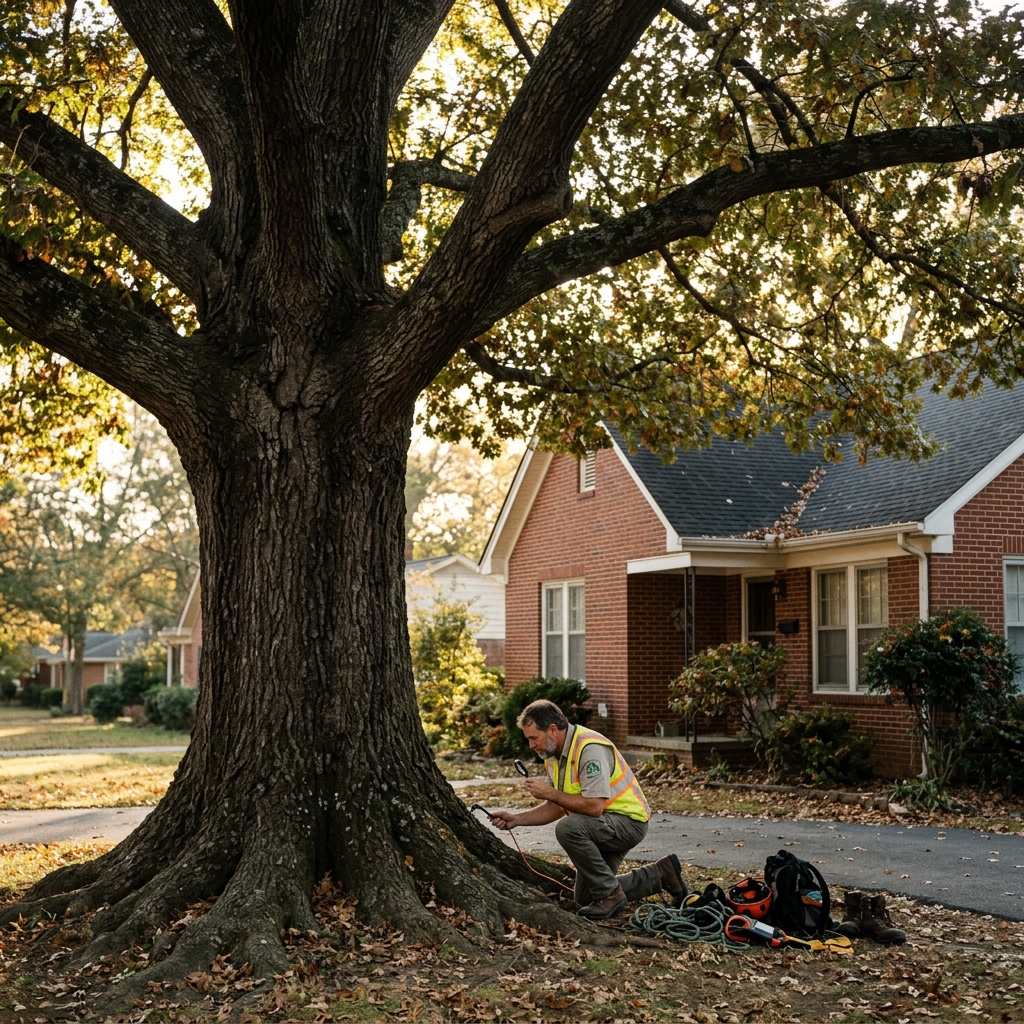
Mature trees are one of the most valuable features on a Jonesboro property. They provide shade, reduce energy costs, and add significant curb appeal. They also require maintenance. When that maintenance is skipped, trees that should be an asset become a liability.
Deadwood Removal Before It Falls
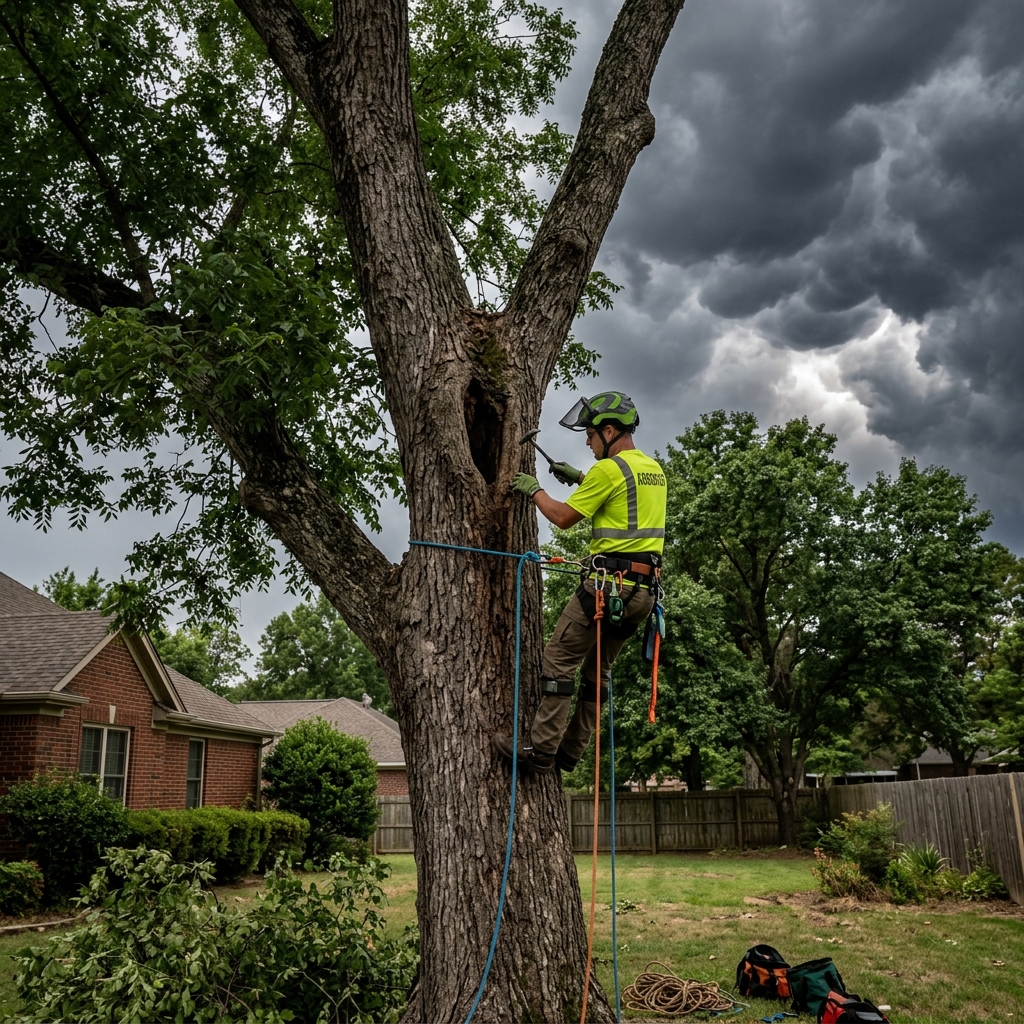
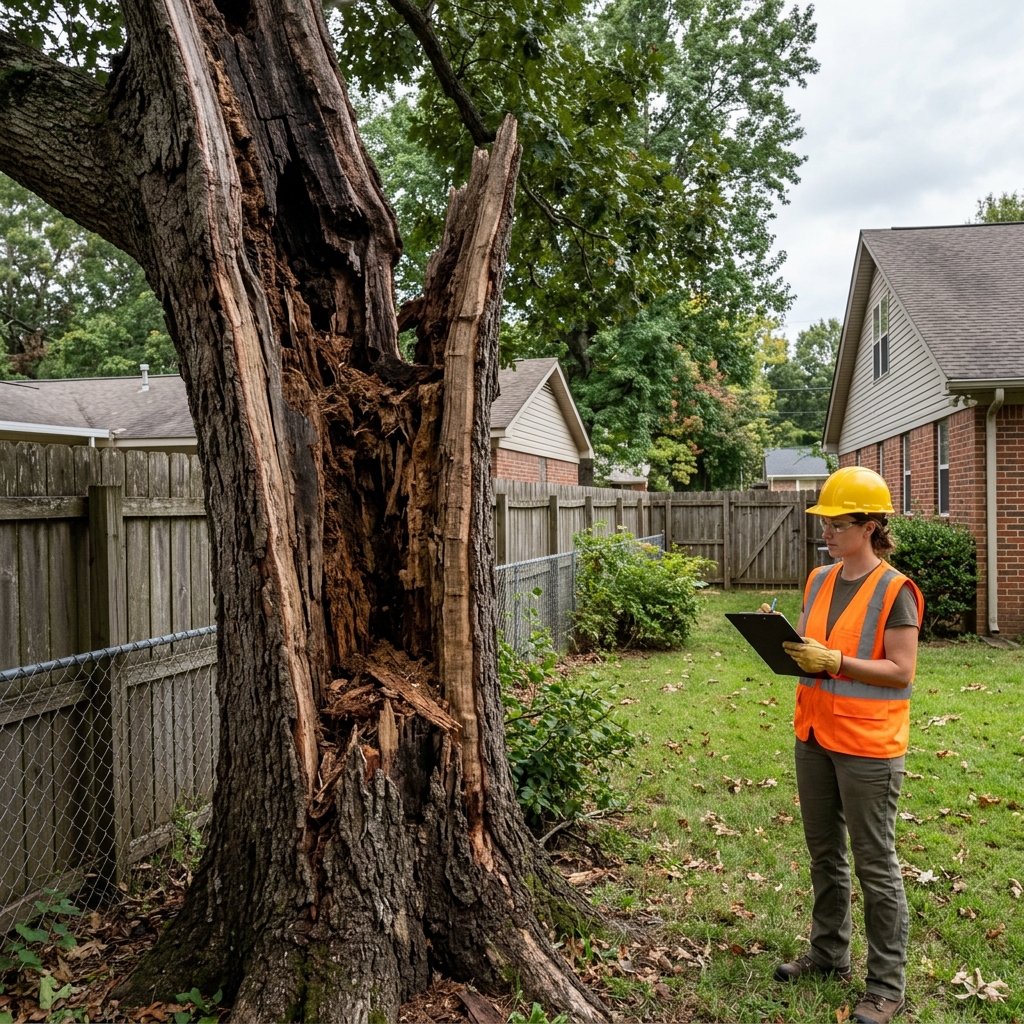
Dead branches accumulate in canopies over time. A branch that dies gradually loses its attachment to the living wood around it and eventually falls. Professional trimming identifies and removes deadwood throughout the canopy, including the smaller accumulation of dead wood higher in the tree not visible from the ground. For structural pruning by trained professionals, this includes proper cuts at the branch collar to promote healthy compartmentalization.
Roof and Structure Clearance
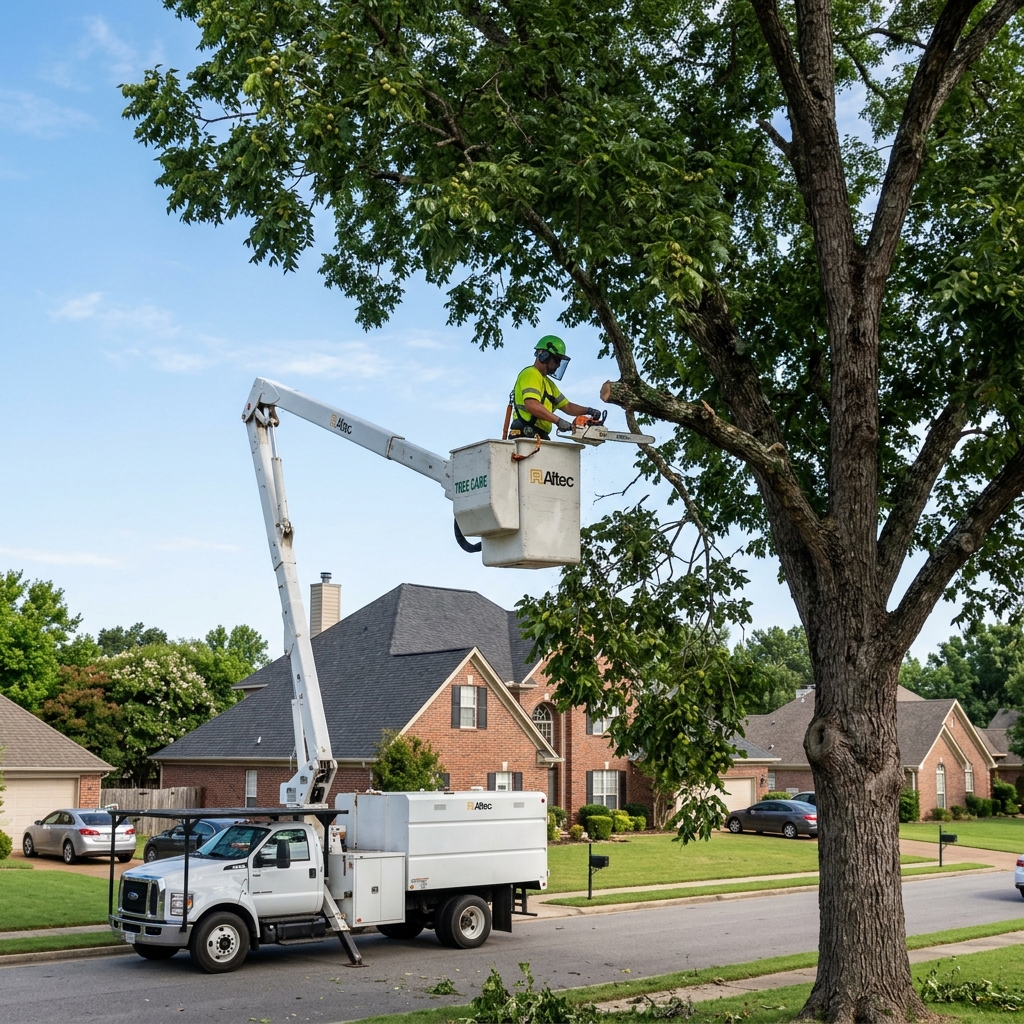
Branches that overhang or contact a roof allow wildlife access, abrade shingles through constant movement, accumulate debris in gutters, and can fall on the roof under storm load. Clearance trimming establishes and maintains a safe working distance between the canopy edge and roof surfaces. Addressing this before branches make contact is always the more cost-effective approach.
Wind Resistance Reduction
A dense, unpruned canopy acts like a sail, catching wind and placing enormous stress on trunk and root connections during storm events. Crown thinning through routine care for overgrown trees reduces that load without removing healthy structure. In the context of Northeast Arkansas weather, this matters. Thunderstorm lines regularly push through Jonesboro with straight-line wind gusts that test every tree on the property.
Utility Line Clearance
Branches growing into power lines and communication lines create outage risk, emergency utility crew response, and fire risk in dry conditions. Getting proactive trimming done before branches reach utility lines gives a trained crew the ability to make proper structural cuts rather than clearance-only cuts that don't account for the tree's health. Once branches are in the wire zone, options narrow considerably.
Fence and Neighbor Property Considerations
Branches that grow over property lines can become a point of conflict with neighbors and a source of liability if they fall on adjacent property. In established Jonesboro subdivisions near Arkansas State University and Craighead Forest Park, mature trees routinely grow beyond property boundaries. Proactive trimming to manage growth direction is easier and less costly than reactive removal after a branch falls on a neighbor's vehicle or fence.
Maintaining Driveway and Walkway Clearance
Low-hanging branches over driveways create vehicle clearance issues and reduce pedestrian safety. Seasonal growth can drop canopy edges several feet in a single active growing season for fast-growing species. Clearance trimming establishes a maintained vertical clearance that prevents repeated emergency calls each growing season.
Schedule Professional Trimming for Your Jonesboro Property
We handle residential and commercial tree trimming throughout Jonesboro, Brookland, Bono, and surrounding communities. Written estimates after on-site assessment.
Frequently Asked Questions
Most mature shade trees benefit from professional trimming every 3 to 5 years. Faster-growing species, trees near structures, and trees along utility corridors may need attention on a shorter cycle. Young trees benefit from structural pruning more frequently in their first decade to establish a sound framework.
Trimming typically refers to cutting back overgrown branches for clearance or aesthetic reasons. Pruning involves more selective cuts focused on the tree's structure, health, and long-term development. Both require proper technique to avoid creating large wounds or leaving stubs that invite decay.
Yes. Topping, flush-cutting through the branch collar, and removing too much live crown in a single session can all cause long-term damage. Large pruning wounds made incorrectly take much longer to compartmentalize and are more susceptible to rot and disease entry.
Late winter or early spring, before new growth emerges, is generally a good time for structural pruning on most species in Arkansas. However, dead, damaged, or hazardous limbs should be addressed whenever they are identified rather than waiting for a specific season.
In some cases, yes. If branches are in contact with or very close to live conductors, trimming may need to be done in coordination with the utility company or by crews certified for utility-adjacent work. Never attempt to trim branches touching live power lines yourself.
Bottom Line
Professional tree trimming is part of responsible property ownership in Jonesboro. The cost of seasonal canopy maintenance on a planned schedule is consistently less than emergency response after a branch fails. Get trimming done before the tree creates a problem, not after.