Key Takeaways
For most planned structural pruning in Jonesboro, the best window is late winter through early spring, shortly before active growth begins. Timing changes for spring-flowering trees, storm-damaged limbs, and species with particular disease concerns. Dead, broken, hanging, or hazardous branches should be assessed promptly instead of waiting for a preferred season.
The calendar matters when you plan tree trimming, but it is not the only factor. Tree species, branch condition, flowering cycle, weather, and the purpose of the work all affect the safest and most useful time to prune. In Jonesboro, a practical plan usually separates routine canopy work from urgent safety work.
Routine pruning can often be scheduled for a favorable seasonal window. A cracked limb above a driveway, a hanging branch after a thunderstorm, or wood touching energized utility lines is different. Those conditions call for prompt assessment and should not be left in place simply because the season is less than ideal.
What Is the Best Time to Trim Trees in Jonesboro?
For many established deciduous shade trees, late winter to early spring is a useful period for planned pruning. The canopy is easier to inspect before leaves fully develop, and the tree is close to the start of active spring growth. University of Arkansas Division of Agriculture guidance says the ideal time to prune ornamental trees is generally just before rapid growth in spring.
This does not mean every tree on a property should be cut on the same February or March weekend. Spring-flowering ornamentals, fruit trees, evergreens, and trees with active disease problems may need different timing. A site-specific pruning assessment should identify the species and the goal before work begins.
Why Late Winter and Early Spring Often Work Well
Branch Structure Is Easier to See
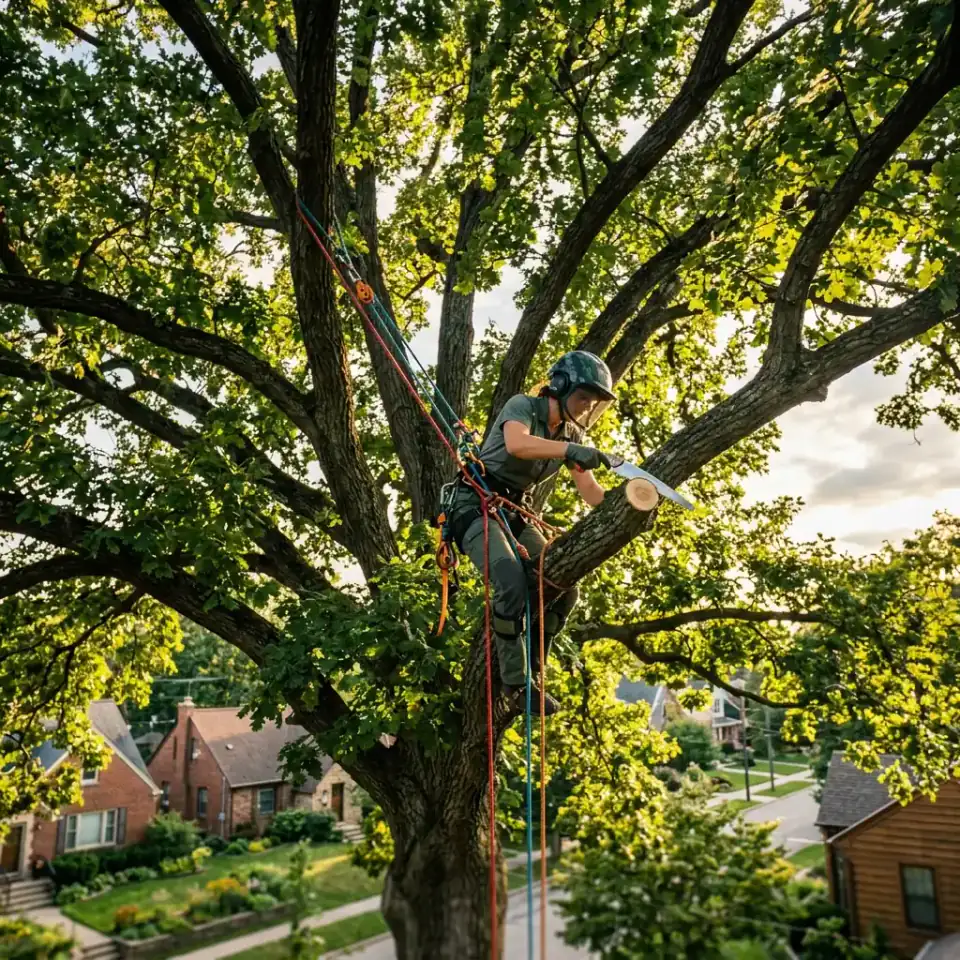
Without a full canopy of leaves, crossing limbs, included bark, old storm damage, deadwood, and crowded interior branches are easier to identify from the ground and from an elevated work position. Better visibility supports selective cuts rather than indiscriminate thinning.
Spring Growth Is Close
Pruning near the end of dormancy places the work closer to the growing season. Arkansas Extension cautions against pruning as trees first enter winter dormancy because fresh wounds may remain exposed through winter. Its homeowner guidance generally points toward early spring rather than early winter for ornamental-tree pruning.
Property Access Can Be Easier
Dormant turf and reduced foliage can improve visibility around fences, roofs, driveways, and service lines. Access still depends on rain, saturated soil, and equipment needs. Heavy equipment should not be placed where it will cause avoidable soil compaction or lawn damage.
A Seasonal Tree-Trimming Guide for Northeast Arkansas
| Season | Typical Use | Important Caution |
|---|---|---|
| Late winter to early spring | Planned structural pruning for many deciduous shade trees | Confirm the species and avoid pruning too early after winter injury |
| After spring flowering | Pruning trees and shrubs that bloom on older wood | Pruning before bloom may remove that year's flowers |
| Summer | Limited clearance work, correction of specific growth, and removal of hazards | Avoid excessive live-crown removal during heat or drought stress |
| Fall and early winter | Inspection, storm preparation, and removal of dead or dangerous limbs | Routine heavy pruning may stimulate or expose growth before winter |
| Any season | Assessment of broken, hanging, split, or unsafe branches | Utility contact and large unstable limbs require qualified help |
When Spring-Flowering Trees Should Be Trimmed
Dogwoods, redbuds, and other plants that flower on growth formed the previous year can lose a large part of their bloom display if they are pruned immediately before flowering. When flower preservation is the main goal, these plants are commonly pruned soon after blooming.
Safety takes priority over flowers. A dead limb or a cracked union should still be evaluated when it is discovered. The timing distinction applies mainly to optional shaping and planned canopy management, not to an active hazard.
Can Trees Be Trimmed in Summer?
Some limited summer pruning can be appropriate. Examples include removing a newly broken limb, correcting a branch that is rubbing a structure, or managing a small amount of undesirable growth. Summer foliage also makes it easier to identify dead branches that failed to leaf out.
Large reductions during hot, dry periods can add stress by removing too much leaf area when the tree relies on its canopy for energy production and temperature regulation. The amount of live crown removed matters as much as the month. Selective professional tree trimming should preserve a balanced canopy and avoid stripping interior branches.
Should You Trim Trees in Fall?
Fall is a good time to inspect trees for deadwood, storm defects, roof clearance, and branches that could interfere with winter weather preparation. It is not automatically the best time for major routine pruning. Arkansas Extension notes that pruning can encourage a growth response and may make plants more susceptible to winter injury when done at the wrong point in the season.
If an inspection finds only routine work, scheduling it closer to spring may be appropriate. If it finds a cracked branch above a target, the condition should be addressed according to risk rather than postponed for several months.
Dead and Damaged Branches Do Not Follow a Calendar
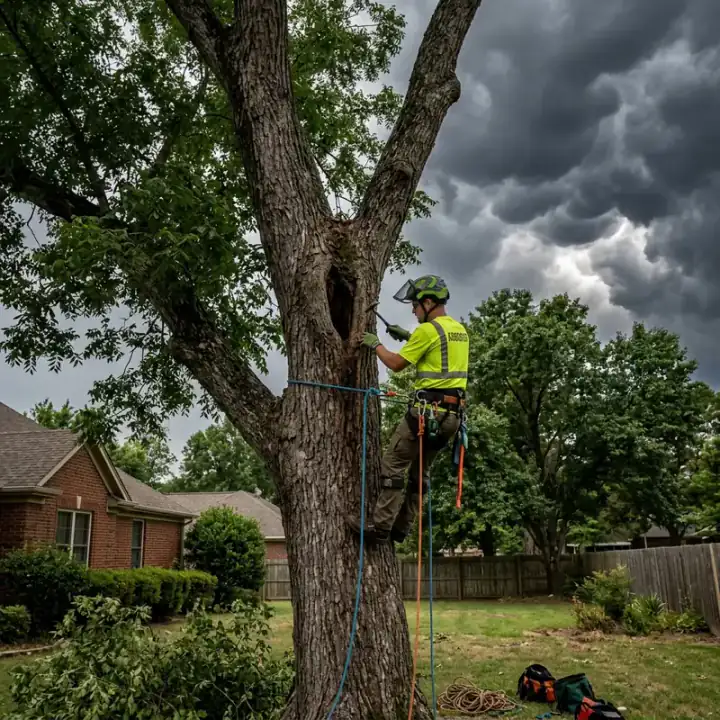
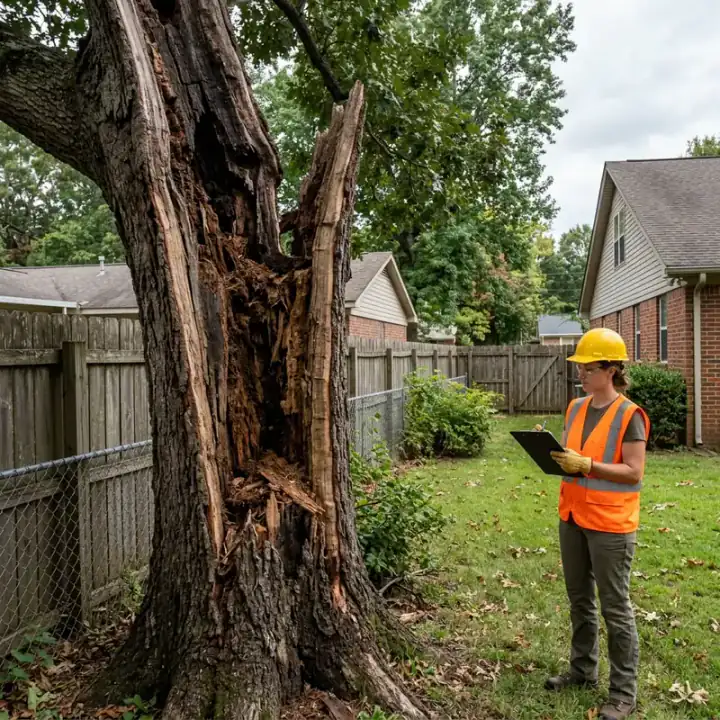
Dead, detached, hanging, or recently split limbs can fail without warning. After straight-line winds, thunderstorms, or ice, inspect the property from a safe distance. Look for fresh cracks, broken tops, branches suspended in the canopy, leaning trees with disturbed soil, and limbs resting on structures.
Do not stand beneath damaged branches or attempt to pull them down. If conductors are involved, keep people away and contact the utility provider. For significant damage, use an emergency tree-service assessment rather than waiting for the normal pruning season.
Timing Depends on the Goal of the Work
- Structural pruning: develops stronger branch arrangement and corrects defects while cuts can remain relatively small.
- Clearance pruning: creates separation from roofs, streets, driveways, signs, and other structures.
- Deadwood removal: removes branches that no longer have living tissue and may be completed when risk and access allow.
- Storm restoration: addresses broken branches and evaluates whether enough sound structure remains.
- Flower management: coordinates pruning with the plant's bloom cycle.
A vague request to “cut the tree back” can lead to unnecessary canopy loss. A written scope should identify the branches or objectives involved and state whether the work is for structure, clearance, health, or safety.
Tree-Trimming Practices to Avoid
Tree Topping
Topping removes large portions of the crown and leaves stubs or cuts branches without regard to natural growth points. The resulting sprouts are often weakly attached, and the large wounds can increase decay risk. Topping is not a substitute for species-appropriate pruning.
Flush Cuts and Long Stubs
A correct pruning cut preserves the branch collar. Cutting flush against the trunk damages trunk tissue, while leaving a long stub prevents the wound from closing efficiently. Large cuts require judgment, rigging, and an understanding of branch load.
Removing Too Much Live Crown
Excessive thinning can expose previously shaded bark, reduce energy production, and shift wind loads onto remaining branches. More cutting does not mean better pruning. The objective is to remove only what is necessary to accomplish the stated goal.
How to Plan Tree Trimming for Your Jonesboro Property
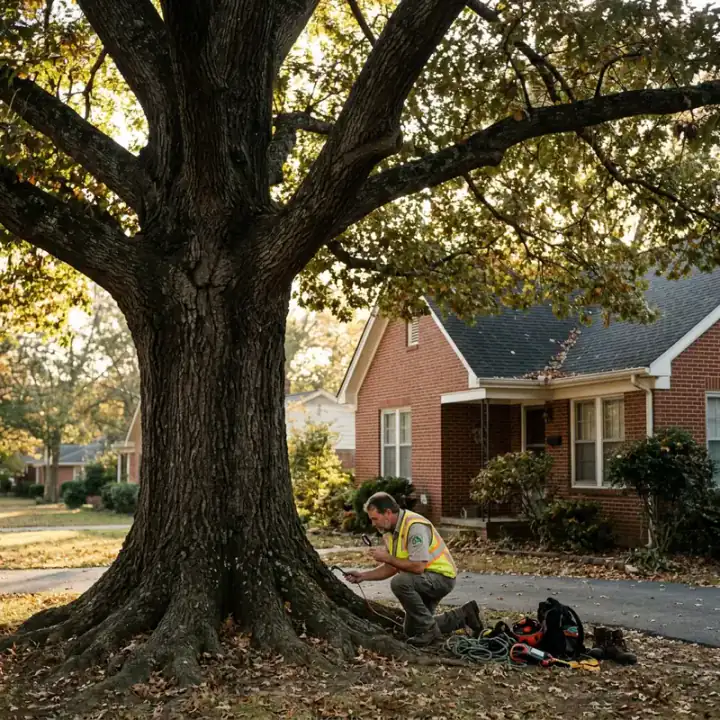
- Walk the property after leaf drop and after major storms. Note dead limbs, roof contact, cracks, and clearance issues without entering a hazardous area.
- Identify priority targets. Branches over homes, parking spaces, play areas, and frequently used walkways deserve early attention.
- Separate urgent work from routine work. Address hazards promptly and schedule non-urgent shaping for an appropriate seasonal window.
- Request a written scope. The estimate should describe the tree, work objective, access needs, debris handling, and any limitations.
- Plan recurring inspections. Mature trees and trees exposed to construction, storms, or changing site conditions need periodic review.
Frequently Asked Questions
Late winter through early spring is often a practical window for planned pruning of many deciduous shade trees in Jonesboro. The exact timing depends on species, flowering cycle, tree condition, weather, and the purpose of the pruning.
Dead and hazardous branches should be assessed when they are found. Work timing still depends on weather, access, nearby utilities, wildlife, and tree stability, but an unsafe branch should not be ignored while waiting for a preferred pruning month.
If preserving flowers is the goal, many spring-flowering trees and shrubs are pruned shortly after blooming because their buds formed on older growth. Dead, broken, or dangerous branches are a safety exception and should be evaluated promptly.
No. Topping removes major portions of the crown without following natural branch structure. It can create large wounds and weakly attached sprouts. Selective pruning should use appropriate branch unions and preserve a functional canopy.
Bottom Line
The best time to trim trees in Jonesboro is usually based on both season and purpose. Late winter to early spring works well for much planned pruning, while spring-flowering plants may be scheduled after bloom. Hazardous limbs require prompt attention in any season. Start with an on-site assessment so the pruning plan fits the tree instead of relying on a single calendar rule.
Sources and Safety Resources
These independent resources explain pruning timing and safe tree-care practices. Local species, weather, and site conditions still require individual assessment.