Residential and commercial tree care across Jonesboro and Craighead County. We assess each tree and property individually before recommending pruning, removal, or any other course of action.
We are a local tree service company operating out of Jonesboro, Arkansas, providing tree removal, trimming, pruning, stump grinding, emergency response, and site clearing for residential and commercial property owners throughout Craighead County and the surrounding region.
Every project starts with an on-site evaluation. We look at the tree's structural condition, root zone, proximity to structures, available drop zone, and equipment access before recommending any work. What a tree needs depends on its species, age, condition, and where it stands on the property—not on a standardized price list.
We work with single-family homeowners, landlords, property management companies, HOAs, commercial building owners, contractors, and developers across Jonesboro, Brookland, Bono, Bay, Lake City, and unincorporated Craighead County.
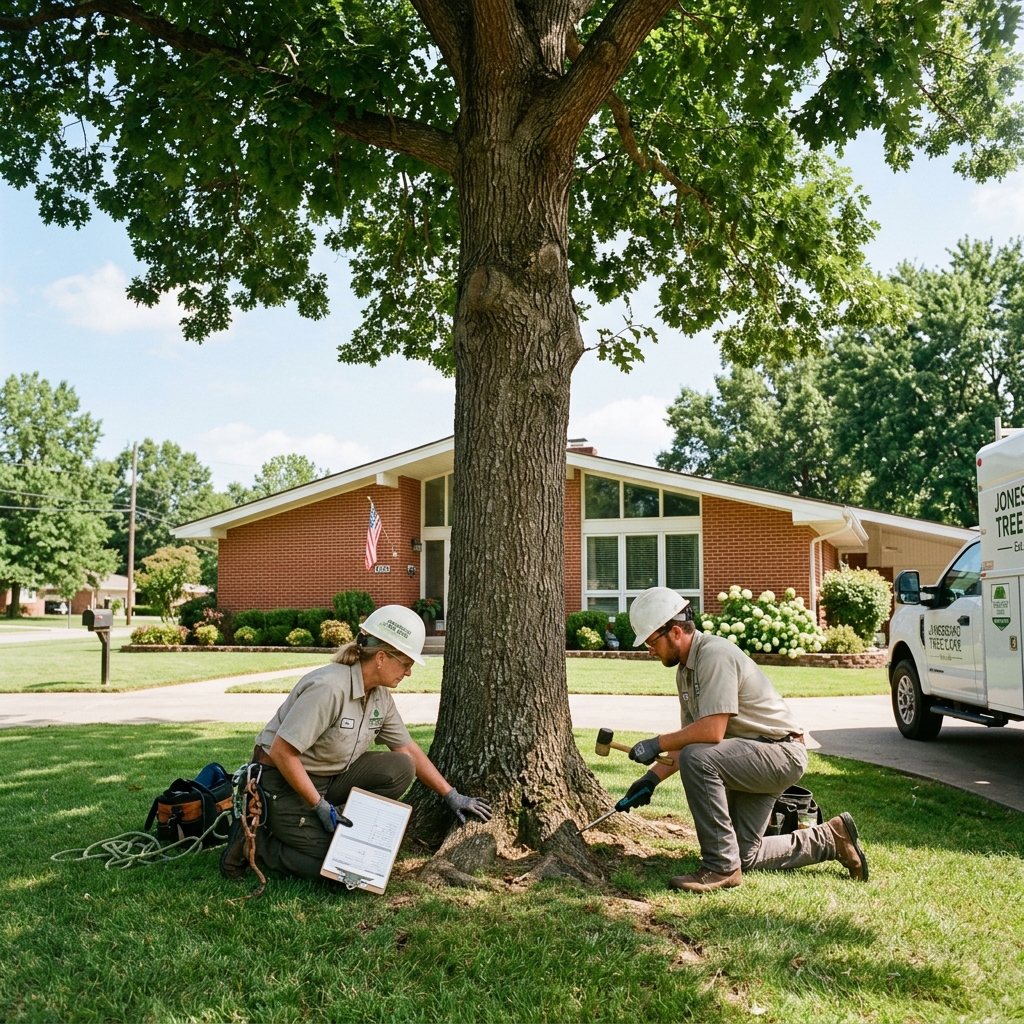
What separates practical, field-tested tree care from a sales call is the detail of the assessment before any work begins.
We respond promptly to estimate requests, schedule site visits efficiently, and provide clear timelines based on current workload. For emergency situations involving fallen or critically hanging trees, we prioritize calls based on urgency and hazard level. Routine pruning and removal jobs are typically scheduled within a reasonable window—we'll give you an honest timeframe rather than a guarantee we can't back up.
Our crew has hands-on experience with the tree species, soil conditions, and property types common to Jonesboro and Craighead County—mature oaks, sweetgums, Bradford pears, pines, and elms in older central Jonesboro neighborhoods, as well as fast-growing landscape trees on newer residential properties near Valley View and the Southwest Drive corridor. We understand the difference between a structural pruning job and a routine clearance cut, and we don't treat every tree the same way.
Estimates for tree work depend on the tree's size and condition, available access, rigging requirements, equipment needed, and debris disposal. A price quoted over the phone without seeing the property often doesn't match the final invoice. We provide written, site-specific estimates after evaluating the tree and surroundings so there are no surprises when the job is finished.
Before any cut is made, we establish a work zone, assess the fall zone, plan rigging points, and position equipment to protect your lawn, driveway, fence, roof, and landscape beds. Ground protection mats are used when soil conditions or access paths require it. Trees near occupied structures are dismantled in sections using controlled rigging rather than felled in one piece.
We explain what we found during the site evaluation, why we're recommending a particular course of action, what the work will involve, and what to expect during and after the job. For commercial projects or properties with tenants, we coordinate scheduling, access points, and work-zone boundaries in advance so operations are disrupted as little as possible.
Equipment selection depends on the tree and the property—not a one-size approach. We use climbing systems, aerial lifts, bucket trucks, rigging ropes, lowering devices, wood chippers, stump grinders, and compact loaders based on what the job actually requires. For large trees near structures or in confined areas, we plan sectional dismantling with controlled lowering rather than relying on space that may not be available.
From routine pruning to complex technical removals, each service is evaluated on site before work begins.
Tree removal is appropriate when a tree is dead, severely structurally compromised, hazardously positioned near a home or other structure, or simply in the wrong location for the property. Every removal starts with an evaluation of the tree's condition, trunk integrity, root plate, lean, and the surrounding site layout. We determine whether the tree can be felled in sections or needs to be dismantled from the top down using rigging. Properties with limited side-yard access, overhead utilities, fences, pools, or nearby structures require careful drop-zone planning and controlled lowering—not just a cut at the base.
View Tree Removal Details →Pruning is not trimming for appearance alone. Structural pruning involves removing deadwood, correcting poor branch attachments, reducing overextended limbs, and improving crown balance without removing more live wood than the tree can recover from. Crown cleaning removes dead, crossing, and weakly attached branches. Crown reduction addresses limbs that have grown too close to roofs, driveways, or neighboring structures. We make proper pruning cuts at the correct location—not flush cuts or stubs that lead to decay and regrowth problems. We do not recommend or perform topping, which creates large wounds, accelerates decay, and produces weak, fast-growing sprouts.
View Trimming & Pruning Details →Northeast Arkansas storm season brings straight-line winds, severe thunderstorms, and occasional ice accumulation that can break large limbs, split codominant stems, or uproot trees entirely. When a tree or large limb falls across a driveway, roof, fence, or vehicle, the situation needs to be assessed before anyone starts cutting. Removing a tree that's under tension—leaning against a structure or pinned under another tree—requires careful rigging to avoid uncontrolled movement. We prioritize emergency calls based on the hazard level and handle debris hauling, stump work, and property cleanup as part of the job.
View Emergency Service Details →Stump grinding reduces a tree stump to wood chips below the soil surface. Standard grinding depths vary, and underground roots are typically left in place—grinding does not remove the entire root system. Surface roots extending from the stump can also be ground where equipment access allows. After grinding, the stump area can be filled with soil and prepared for seeding, sodding, or landscaping. We discuss depth requirements, debris removal preferences, and any underground utility considerations before starting stump work.
View Stump Grinding Details →Identifying a hazardous tree requires more than looking at it from the street. Signs of concern include visible decay or cavities at the trunk base, fungal fruiting bodies on roots or bark, significant lean that wasn't present before, root-plate movement after heavy rain, cracked or included bark at branch unions, dead tops or large areas of crown dieback, and hanging or partially attached limbs. Not every defect means removal is necessary—the appropriate response depends on the defect type, its location, the tree's overall structure, and what's located within the potential fall zone. An on-site evaluation is required before making that determination.
View Pruning & Assessment Details →Deadwood removal reduces the likelihood of branches dropping onto roofs, vehicles, fences, walkways, or people below. Crown cleaning involves removing dead, diseased, broken, and crossing limbs throughout the canopy. Clearance pruning addresses specific conflicts—a branch touching a roof, blocking a driveway or sidewalk, obscuring a sign or entrance, or growing into overhead service lines. For properties near Harrisburg Road, Nettleton Avenue, or along commercial corridors, clearance pruning is often a routine maintenance need. We assess each situation individually and remove only what is necessary for the clearance objective.
View Crown Cleaning Details →Large trees near occupied buildings, trees in narrow side yards, trees behind structures with no direct equipment access, and trees on sloped or uneven ground require detailed planning before work begins. When a straight fell is not possible, we use sectional dismantling—cutting the tree from the top down in sections and rigging each piece to the ground in a controlled manner. Equipment options depend on tree height, crown spread, and site access. Aerial lifts and bucket trucks are used where access allows; climbing and hand rigging are used where they don't. Crane-assisted removal is evaluated when the tree size or site conditions make sectional rigging impractical.
View Technical Removal Details →Supplemental support systems—high-strength cables installed between codominant stems or major branches—can reduce the risk of failure in certain structural situations. Cabling is not appropriate for every tree, and it does not guarantee that a tree will not fail. Before recommending a support system, we evaluate the overall tree structure, the specific defect, the load and weight distribution, and the target value below. Cabling is one option to discuss during an assessment; it is not a substitute for proper pruning or, in some cases, removal of severely compromised limbs or stems.
View Cabling & Structural Details →Clearing a lot for construction, a new driveway, an addition, or a development project involves more than felling trees. Stumps need to be ground or removed, brush chipped or hauled, and the site left in a condition ready for the next phase of work. We work with homeowners, builders, general contractors, and developers on lot and land clearing projects ranging from single lots in established Jonesboro neighborhoods to larger tracts in unincorporated Craighead County. Selective clearing—removing only designated trees while protecting others—is also available for projects where tree preservation is part of the site plan.
View Lot Clearing Details →Complex tree projects demand detailed site planning, the right equipment combination, and experience with controlled work in confined environments.
Commercial tree service in Jonesboro requires coordination that residential work often doesn't. Parking-lot tree trimming near Caraway Road, entrance and signage clearance along Red Wolf Boulevard, and tree maintenance around office and retail properties along Stadium Boulevard all involve working around customers, vehicles, and active business operations. We schedule commercial work to minimize disruption—early morning starts, phased work zones, and coordinated timelines with property managers and tenants. We document the work completed and communicate clearly before, during, and after the project.
Learn About Commercial Tree Service →Crane-assisted tree removal is evaluated when a tree is too large to dismantle safely using aerial lift and rigging methods alone, or when the site layout makes sectional lowering impractical—for example, a large oak between two homes with minimal side-yard clearance, or a pine tree growing directly over a garage or parked vehicles. Not every large tree requires a crane, and crane access itself requires adequate space for setup and operation. We assess access, overhead clearance, soil conditions, and surrounding structures before determining whether crane involvement is appropriate.
View Crane Removal Details →After straight-line winds, a severe thunderstorm, or ice accumulation strips limbs and drops trees across Jonesboro properties, the cleanup phase involves more than hauling wood. Brush and debris must be chipped, heavy log sections loaded and removed, stumps ground, and affected lawn or landscape areas raked and cleaned. For older properties in central Jonesboro with mature trees and established landscaping, storm cleanup requires careful equipment movement to avoid additional damage. We handle the full cleanup scope—not just the tree removal—so the property is returned to a usable condition.
View Storm Cleanup Details →For single-family homeowners, tree work typically centers on removing trees that are dead, diseased, structurally compromised, or too close to the house, fence, or driveway. Pruning projects address branches growing over roofs, blocking gutters, or obstructing views. Stump grinding follows removal to reclaim lawn space or prepare areas for landscaping or construction.
We serve homeowners across all Jonesboro neighborhoods, including older properties in central Jonesboro with established mature shade trees, newer developments in the Valley View area, and homes near Craighead Forest Park and along Southwest Drive. Families maintaining properties through a sale, estate administrators clearing lots, and homeowners preparing for remodeling projects or additions also contact us regularly.
Commercial tree work in Jonesboro ranges from parking-lot and entrance maintenance for retail and restaurant properties to large-scale lot clearing for commercial development. Properties along business corridors, near medical offices, warehouses, schools, churches, and multi-unit housing all have different scheduling and access considerations that residential jobs don't require.
We coordinate with property managers, building owners, HOAs, and condominium associations to plan work around operating hours, tenant access, and visitor traffic. For multi-building commercial properties and shopping centers, tree projects may be phased across multiple visits. We provide documentation of work completed for property records and management files.
Equipment selection is determined by the tree, the site, and the work method—not by what's easiest to mobilize.
Used for canopy access on trees where aerial work is more efficient than climbing and where the site provides adequate drive-through or setup space.
Used when aerial lift access isn't feasible—narrow yards, fenced properties, or terrain that equipment can't navigate. Rigging ropes and blocks allow controlled lowering of sections.
Evaluated for large trees in confined spaces where conventional dismantling isn't practical. Crane use requires site assessment for access, overhead clearance, and ground conditions.
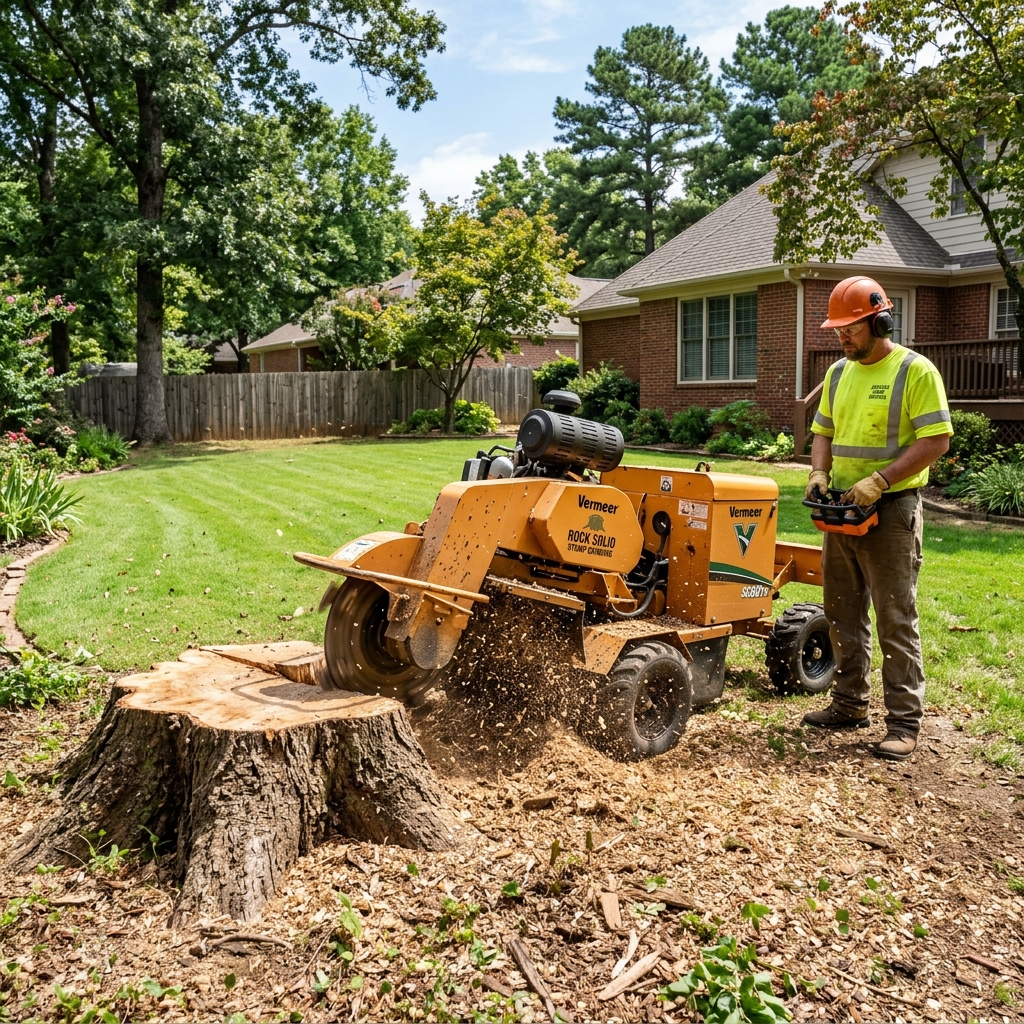
Used to grind stumps to below grade. Equipment size is matched to stump diameter and site access. Surface roots can often be addressed during the same visit.
Process brush, limbs, and smaller-diameter wood into chips for efficient removal. Larger log sections are cut to length for hauling.
Used on larger jobs or lot-clearing projects to move logs, load debris, and support efficient site cleanup. Ground protection mats used as needed.
Four steps from initial contact to final cleanup—no vague timelines, no skipped evaluations.
We visit the property, walk the site, and evaluate the tree from multiple angles. We assess trunk condition, root zone, crown structure, lean, proximity to structures, available drop zone, overhead utilities, and equipment access routes. Photos are taken for documentation. This step cannot be replaced by a phone description or emailed photographs—on-site conditions often differ significantly from what a photo can capture.
After the assessment, we explain what we observed, outline the available options—preservation, pruning, cabling, or removal—and provide a written estimate based on the actual work required. Equipment needs, rigging requirements, and debris removal are factored into the estimate. We answer questions and give realistic expectations about the timeline and what to prepare before the crew arrives.
On work day, we establish the work zone, position equipment, protect adjacent surfaces, and begin the job systematically. For removals, sections are rigged and lowered in a controlled manner. Brush goes through the chipper; larger sections are cut for hauling. Crew communication is maintained throughout to keep the work area organized and safe. Neighboring properties, driveways, fences, and lawn areas are monitored and protected throughout the work.
If stump grinding is part of the job, we complete it after debris is cleared from the area. The site is raked, blown, and inspected before we leave. If there are concerns about remaining stump material, surface roots, or the surrounding area, we address them before closing out the job. For commercial or managed properties, documentation of the work completed is provided to the property owner or manager.
Knowing what to look for helps property owners decide when to call for a professional assessment and when routine maintenance is sufficient.
A tree that has lost leaf-out in the majority of its canopy, shows extensive bark loss, has a soft or hollow trunk, or has advanced fungal fruiting at the base may be reaching the end of its structural lifespan. Dead trees don't fail on a predictable schedule—they can remain standing for years or drop limbs without warning. Assessment determines whether removal is appropriate based on the tree's condition and what's below it.
Bradford pears are common throughout Jonesboro neighborhoods and are known for developing included bark at branch unions—a weak attachment type where bark becomes trapped between stems rather than forming a strong wood connection. As the tree matures, these unions become increasingly likely to split during storms or under heavy leaf and ice loads. Removal or heavy reduction is often recommended before failure occurs.
After a severe thunderstorm or ice event, limbs that appear attached may be partially broken and hanging under their own weight. Hanging wood is one of the more immediate concerns after a storm—it can drop without warning onto anything below. Assessment of the full canopy, not just the visible damage, is important after a major storm event.
Arkansas receives periods of heavy rainfall that saturate soil and reduce root-plate stability—especially in low-lying areas, near drainage channels, and on clay-heavy soils common in Craighead County. A tree that develops a new lean after significant rainfall, or shows signs of root-plate lifting on one side, warrants an evaluation before the next wind event.
Trees with two or more stems of roughly equal diameter growing from a common attachment point often develop included bark—a structurally weak union that may crack under load. The risk depends on the stem diameter, the attachment angle, what's in the fall zone, and whether supplemental support is a realistic option. Not every codominant stem is an immediate hazard, but many benefit from early structural pruning when trees are young.
Decay inside a trunk or at branch unions is not always visible from the outside. Fungal fruiting bodies—shelf fungi, conks, or mushrooms—growing at the base or on the trunk surface often indicate internal decay. A cavity at or near the root flare, particularly on the side facing a structure or frequently used area, warrants a professional evaluation of the tree's remaining structural integrity.
The following examples are generalized representations of the types of projects common to Jonesboro and Craighead County properties. These are not verified customer accounts.
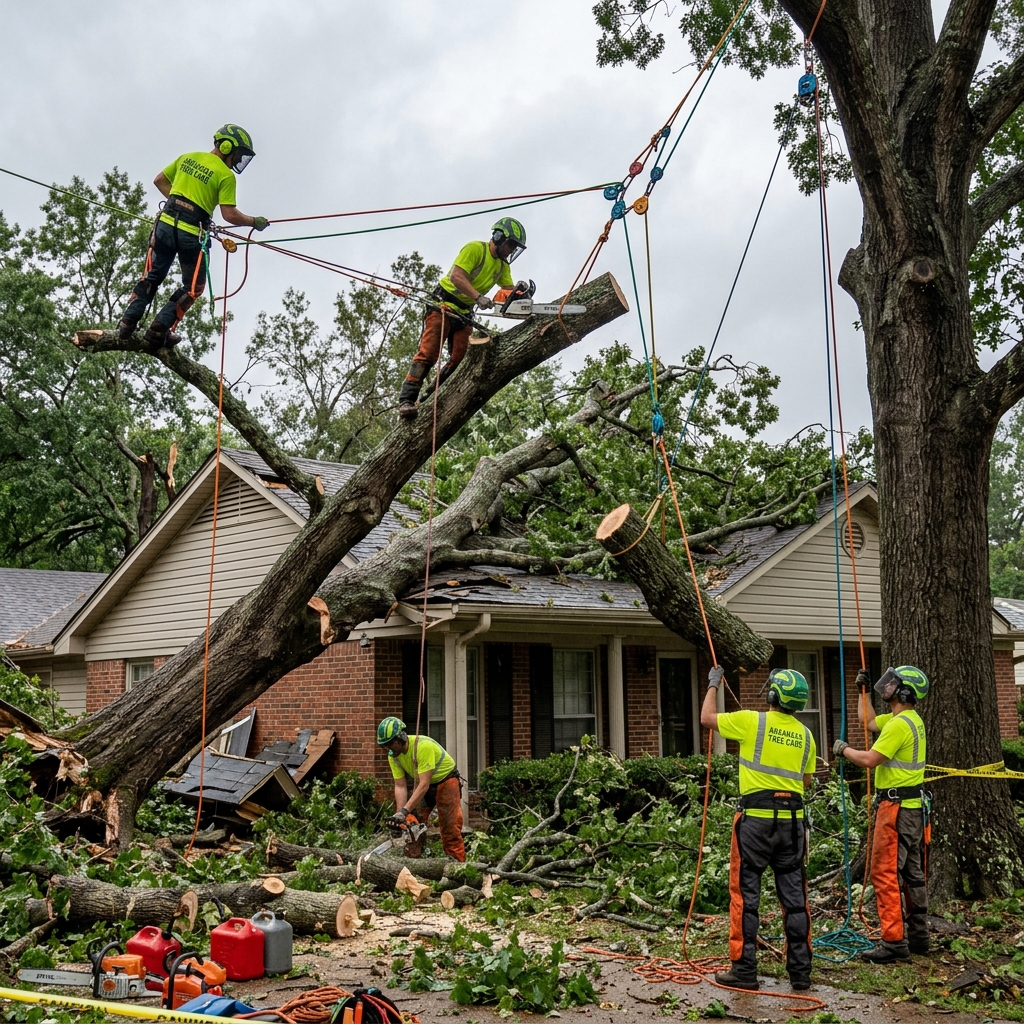
Situation: A large sweetgum, approximately 70 feet tall and 24 inches in diameter at breast height, sustained a major split at a codominant union during a severe thunderstorm. One stem had partially fallen and was leaning against the corner of the garage roof. The other stem remained standing but was structurally compromised.
Assessment: Both stems were evaluated for structural integrity and lean. The grounded stem was under significant tension against the structure. Two work zones were established—one at the front of the property and one along the fence line. Three parking spaces adjacent to the garage were temporarily marked off.
Work completed: The grounded stem was carefully rigged in sections and removed from the garage without additional roof damage. The standing stem was dismantled from the top down using a bucket truck and hand rigging. Eleven sections were lowered to the ground in controlled sequence. Debris was chipped and hauled the same day. The stump (approximately 22 inches at the grind point) was ground and the area cleaned up.
Result: Garage roof intact, fence protected, driveway and lawn usable the following day. Documentation provided to the homeowner.
Situation: A commercial property with six mature oak trees lining the parking-lot entrance had multiple trees with branches extending over parking spaces, obstructing the entry signage, and dropping debris onto customer vehicles. One tree showed significant deadwood in the upper canopy. Work needed to be scheduled around business hours.
Assessment: Each of the six trees was individually evaluated. Four required crown cleaning and deadwood removal. Two required selective crown reduction to address limb extension over the parking area. One tree had a partially detached large limb requiring priority removal before the parking lot opened.
Work completed: Work was conducted over two early-morning sessions before business hours. The priority limb was removed during the first visit. Crown cleaning and reduction were completed on the remaining five trees during the second visit. Eight parking spaces were temporarily coned off per session. Debris was chipped and removed before the property opened each day. Documentation was provided to the property manager.
Result: Parking lot cleared of debris hazard, entry signage visible, six trees in improved structural condition. Zero disruption to business operations.
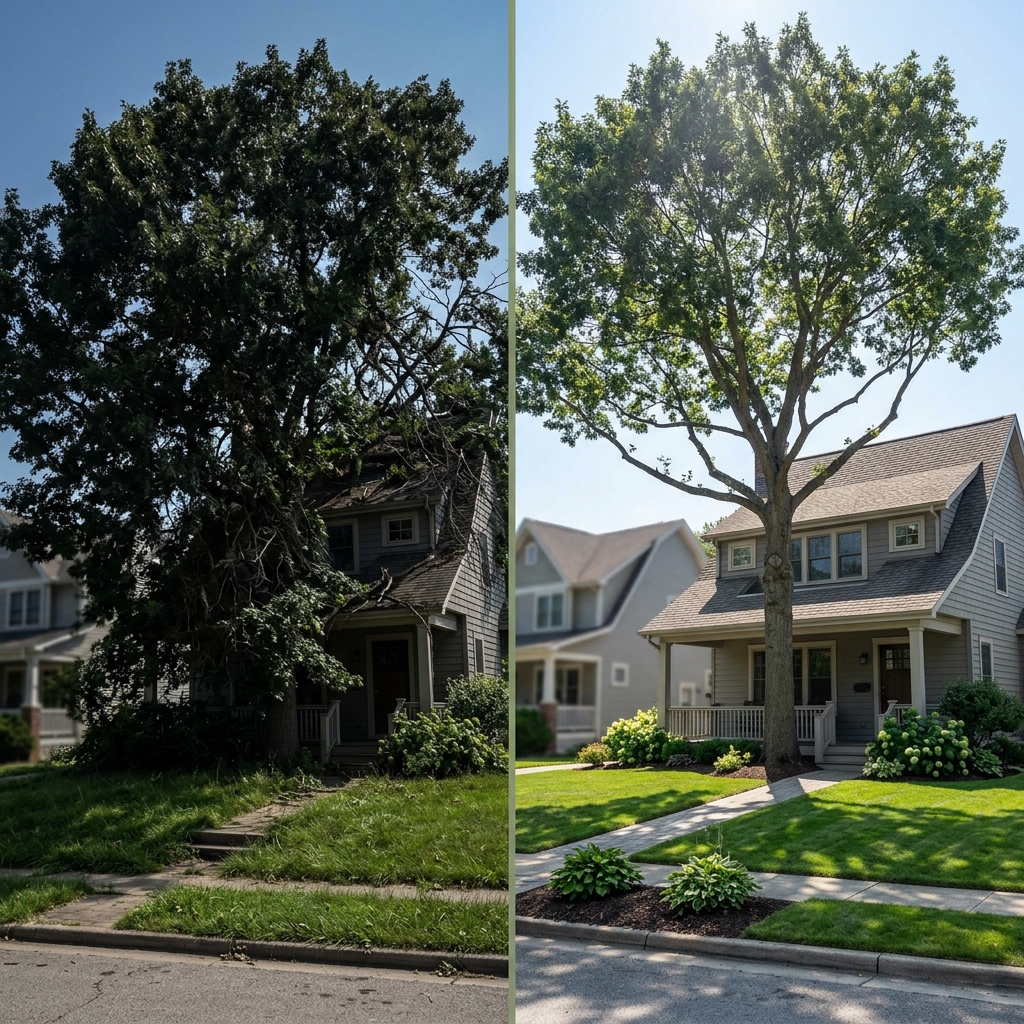
See the difference professional tree care makes. These are real projects from Jonesboro properties — no stock photos, just honest results.
Tree Trimming & Shaping
 Before
After
Before
After
Overgrown oak canopy blocking sunlight and touching the roofline — trimmed, shaped, and raised for clearance.
Stump Grinding
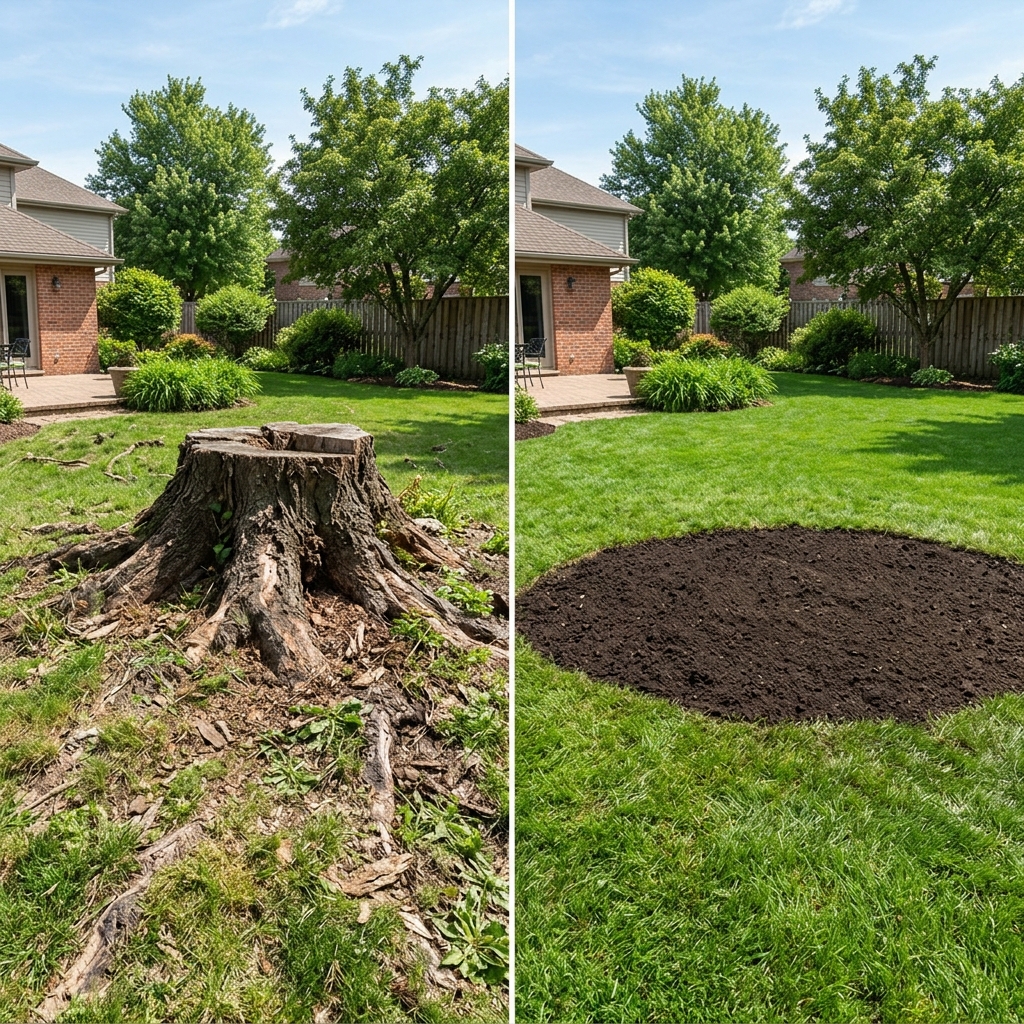 Before
After
Before
After
Unsightly stump ground below grade and backfilled — ready for sod or landscaping.
Storm Damage Cleanup
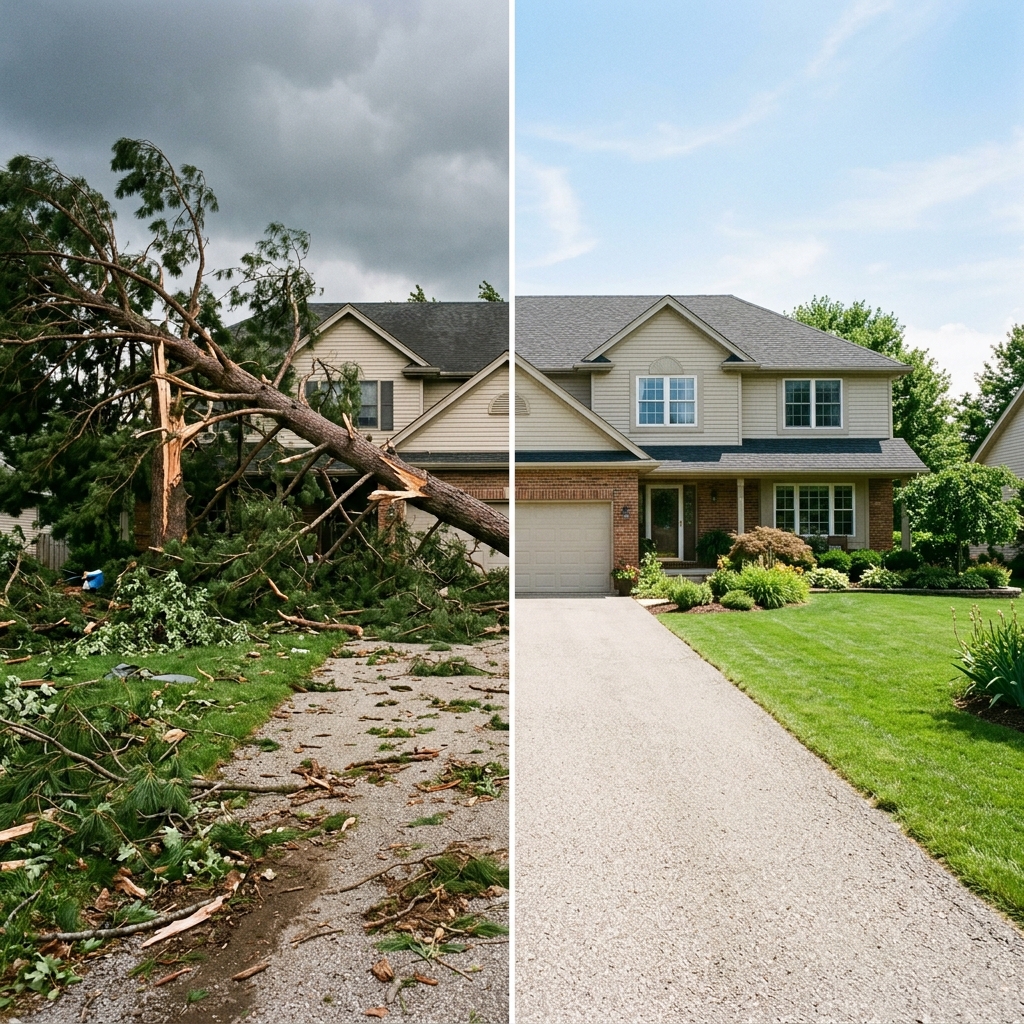 Before
After
Before
After
Large pine fell across the driveway during a storm — removed, debris cleared, and yard fully restored same day.
Straightforward answers to the questions property owners ask most often about tree removal, trimming, stump grinding, and emergency tree service in Jonesboro.
Tree removal pricing in Jonesboro depends on the tree's height and trunk diameter, its structural condition, the available drop zone, access for equipment, the rigging method required, debris removal, and whether stump grinding is included. A small dead tree near an open lawn costs significantly less than a large oak between two structures in a narrow side yard requiring sectional dismantling and rigging. We provide written estimates after an on-site evaluation—not ballpark figures over the phone.
Common warning signs include large dead branches in the canopy, visible cracks or splits at trunk unions, fungal growth at the base, a trunk that sounds hollow when knocked, significant new lean not present before recent storms, soil lifting or cracking near the root flare, and bark that's peeling or absent over large areas. That said, not all hazardous conditions are visible from the ground, and not all trees showing one of these signs are in immediate danger. An on-site evaluation provides a more accurate picture than photos or a description.
Stump grinding is typically quoted separately from tree removal. Some property owners want the stump ground immediately; others prefer to decide after seeing the stump or want to schedule grinding later. We discuss stump-grinding options as part of the estimate process so you can decide what works for your timeline and budget.
Stump grinding reduces the visible stump to below grade—typically several inches below the soil surface. The underground root system remains in place and will decompose naturally over time. Surface roots extending from the stump can often be addressed during grinding where equipment can reach them. Grinding does not eliminate the possibility of root decay, soil settling over the stump area, or occasional sprout growth from remaining roots, depending on the tree species.
First, keep people away from the area—a tree that has partially fallen on a structure can shift unexpectedly, and a vehicle under a large limb should not be approached until the tree is secured. Contact us to assess the situation before any cutting begins. Trees under tension against a structure need to be rigged carefully to avoid uncontrolled movement during removal. If there's a potential utility line involved, contact your utility provider before any work begins. For insurance documentation purposes, photograph the scene before any debris is moved.
Photos can help with initial planning and give us a general idea of the tree and property, but they're not a substitute for an on-site evaluation. Root conditions, trunk defects below the bark surface, soil saturation, underground utilities, equipment access restrictions, and the actual available drop zone typically can't be assessed from a photograph. We'll usually need to visit the property to provide an accurate, written estimate.
Bradford pears develop included bark—a structurally weak attachment type where bark becomes trapped between co-equal stems as the tree grows. Unlike a healthy branch union where wood fibers interlock for strength, an included bark union is essentially two stems wedged together. As the trees mature and the crown grows heavier, these weak unions are increasingly likely to split under their own weight, wind load, or ice accumulation. Removal while the tree is still standing is generally safer and simpler than dealing with a split after the fact.
Yes. We work with commercial building owners, property management companies, HOAs, landlords, apartment managers, retail centers, offices, restaurants, warehouses, schools, churches, and developers throughout Jonesboro and Craighead County. Commercial work is scheduled around business operations, tenant access, and customer traffic. We provide documentation of work completed for property records.
Debris removal—chipping brush, hauling log sections, and raking the work area—is included in our standard tree removal service. If you want to keep the wood for firewood or other purposes, let us know during the estimate process and we can discuss how to handle the material. Larger log sections can be cut to manageable lengths when requested.
Permit requirements depend on the property location, the tree's size and species, and local ordinances that may apply. We recommend verifying with the City of Jonesboro or Craighead County before removing trees on certain property types. We can assist with the permit identification process and discuss what documentation may be needed, but we do not guarantee permit approval or act as a permitting agent.
Our service area covers Jonesboro and extends throughout Craighead County and into the surrounding communities of Northeast Arkansas.
Beyond Jonesboro, we serve residential and commercial properties in Brookland, Bono, Bay, Lake City, Trumann, Paragould, Harrisburg, Cash, Monette, Caraway, and unincorporated areas of Craighead County. Properties in these communities present similar tree service needs to those in Jonesboro—storm damage, hazardous tree assessment, stump grinding for landscaping and construction, lot clearing, and routine pruning maintenance.
View Full Service AreaWithin Jonesboro, we work across all areas of the city—from mature-tree neighborhoods in central Jonesboro near Downtown and Race Street, to residential areas near the Arkansas State University area, the Nettleton corridor, Valley View, and properties along Southwest Drive and Harrisburg Road. Commercial service extends along Red Wolf Boulevard, Caraway Road, Stadium Boulevard, Commerce Drive, and the I-555 and U.S. Highway 63 corridors.
Our primary service territory covers the major Jonesboro ZIP codes including 72401 (central and north Jonesboro), 72404 (south and east Jonesboro), and 72405 (north and outlying areas). We also serve properties in surrounding Craighead County communities. Contact us with your address to confirm coverage.
Contact us to schedule an on-site evaluation for tree removal, trimming, stump grinding, emergency service, or lot clearing in Jonesboro and surrounding Craighead County.
Describe the tree, location, and what you need—we'll follow up to schedule an assessment.
Jonesboro, AR & Craighead County
Northeast Arkansas
Find Us On & Verified By